

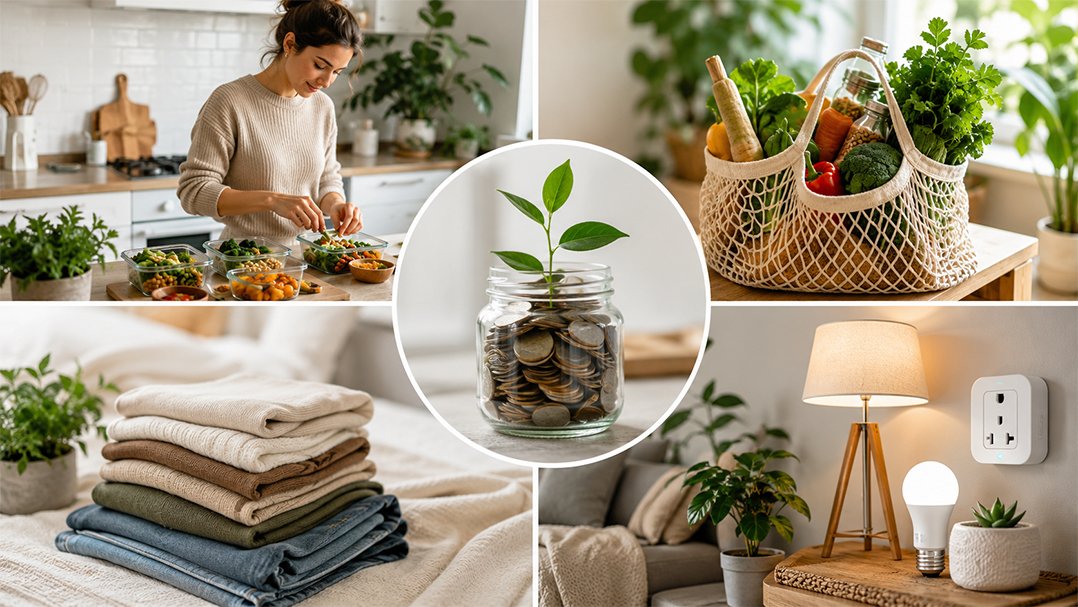
Frugal living has a branding problem.
The word “frugal” conjures images of clipping coupons for two hours to save $3.50, reusing plastic bags until they disintegrate, or tracking every single $2 purchase in a spreadsheet at the end of every day. It sounds joyless. Like something you do because you have no choice, not something you choose because it actually makes your life better.
And a lot of the content around frugal living reinforces that image — extreme couponing, rice and beans forever, never treating yourself to anything that doesn’t serve a functional purpose.
But that version of frugality has a very low success rate. Most people who try it burn out within two months, snap-spend to compensate for the deprivation, and end up in roughly the same financial position they started in, just more tired and more resentful.
The version of frugal living that actually works long-term looks different. It’s about identifying where your money genuinely isn’t buying you much — not where you could technically survive on less — and redirecting that money toward things that actually matter to you. It’s selective. It’s thoughtful. And it doesn’t require you to feel guilty every time you enjoy something.
Why Saving Money Feels Hard
There’s a reason the majority of people who make a serious budgeting attempt don’t sustain it past 90 days. It’s not lack of information. Everyone knows that eating out costs more than cooking at home. Everyone knows that unused subscriptions are wasted money. The information has never been the problem.
The problem is that spending is easy and not-spending is hard. The path of least resistance in a modern economy runs directly through your wallet. Convenience is expensive. Inconvenience is cheap. And most people are operating on a daily budget of time and decision-making capacity that’s already pretty fully spent before they get to any financial decisions.

The approach that works — and I want to be specific about what “works” means here: it means sustainable reductions in spending that don’t require daily acts of willpower — is making the cheaper option more convenient, not making the expensive option harder to access.
Food Habit Change — Working With Your Real Life, Not Against It
The food budget is both the highest-opportunity area for most households and the one most likely to fail if approached too aggressively.
Here’s the truth that most budget cooking content skips: if you significantly reduce the quality or enjoyment of your daily food in the name of saving money, you will not sustain it. Food is too fundamental to daily comfort. And the compensatory spending that follows periods of food deprivation — ordering a large delivery order because you’ve been eating sad budget meals all week — often wipes out whatever was saved.
The approach that works: reduce food spending by reducing waste and preparation barriers, not by eating worse food.
Average American households waste approximately $1,500 worth of food annually according to USDA estimates. Most of this is produce purchased with good intentions that goes bad before being used, leftovers that don’t get eaten, and ingredients bought for a specific recipe that don’t get used again.
Meal prep containers solve the second half of this. They don’t help with buying less; they help with using what you buy. When cooked food is portioned, labeled, and visible in the fridge, it gets eaten. When it’s in whatever pot it was cooked in with plastic wrap over it, it gets forgotten until it’s gone bad and you’re throwing it away.
Glass meal prep containers with airtight lids (Bayco 8-piece set at $28–$35, or Pyrex Simply Store at $20–$30) solve the visibility and portioning problem in a way plastic containers don’t — you can see exactly what’s in them without opening, and glass doesn’t absorb smells that make leftover food less appealing.
The savings from reducing food waste are real but unsexy — they show up as a slightly lower grocery bill over time, not as a dramatic transformation. That’s fine. Unsexiness and sustainability often go together.
Shopping Habit Change — Buying Less Without Feeling Restricted
The most useful framing for shopping habit changes is this: you’re not trying to want less. You’re trying to buy things more intentionally.
The wishlist habit. Instead of buying something when you think of it, add it to a wishlist or a note on your phone. Review the list once a week. Some things will still seem genuinely needed. Many won’t. The time gap between impulse and purchase filters out a surprising amount of spending without requiring any denial in the moment — just delay.
Understanding “on sale” psychology. The feeling of saving money during a sale is real. The actual outcome is often neutral at best. You save 30% on something you wouldn’t have bought at full price. The 30% discount doesn’t cancel the spending; it just made the spending feel less costly. The only sale that saves money is one on something you were already going to buy at full price imminently. Every other “sale” is just a more pleasant way to spend.
Reusable products that reduce recurring spending. A quality reusable water bottle, cloth shopping bags, reusable produce bags, a decent coffee setup at home — these products cost more upfront and genuinely reduce recurring spending on disposable equivalents. Unlike most “investment” purchases in personal finance content, these ones have clear, short payback periods you can actually calculate.

The budget planner for purchase planning. A physical budget planner — Clever Fox Budget Planner ($22–$28) or a simple cash envelope system — creates a concrete spending category for discretionary purchases. Once the month’s discretionary allocation is spent, it’s spent. This constraint, when used consistently, reduces impulse spending not through willpower but through clarity. You’re not saying “I shouldn’t buy this.” You’re saying “I’ve already allocated my buying-things-I-want budget for this month.”
Home Habit Change — Where Small Changes Actually Add Up
The home is where most households have consistent, low-effort savings available that people tend to overlook because they’re not dramatic.
Meal prep as a home routine. Spending 60–90 minutes on a Sunday doing basic prep — washing and cutting vegetables, cooking a large batch of rice or grains, marinating proteins — transforms the weeknight cooking calculation. The mental math of “cook for 45 minutes vs. order delivery for $18” shifts significantly when prep has already been done and dinner is actually 20 minutes away. The containers matter here: well-organized, visible prep reduces the friction of reaching for the phone.
The coffee maker habit. I want to frame this honestly rather than triumphantly, because the “just make your own coffee” line has been so overused it’s practically a joke. The real question isn’t whether you can make coffee at home — almost anyone can. It’s whether you will, consistently, on mornings when you’re tired and running late and the coffee shop is right there.
The answer is almost entirely determined by setup. A Moka pot or drip coffee maker that’s already on the counter, pre-loaded the night before, reduces the morning decision to pressing a button. That’s the difference between the habit working and not working. The machine costs $25–$45. If it replaces three coffees out per week at $4–$5 each, it pays for itself in three to four weeks.
Storage and organization before new purchases. The connection between organization and spending is rarely discussed but real. People buy duplicates of things they already own because they can’t find the original. They buy storage solutions for the new thing when decluttering and organizing the existing stuff would serve better. An afternoon of organizing storage — using simple, inexpensive boxes from IKEA or Target’s Room Essentials line — pays off in visible inventory awareness that prevents unnecessary purchases.
Subscription Cleanup — The Annual Audit Worth Doing
The subscription economy has made recurring charges so small and so numerous that most people have genuinely lost track of what they’re paying for. $9.99 here, $14.99 there, a few $4.99 ones — individually they seem negligible. Together they often represent $80–$150 per month in services, many of which are being used sporadically or not at all.
The audit is simple. Pull up your last two months of bank and credit card statements. Every recurring charge goes on a list. Then: when did you last use this? What would you do without it? Is there a free alternative that would serve you adequately?
Services that commonly survive this audit: one streaming service (the one you actually watch), cloud storage you’re genuinely using, one music service.
Services that commonly don’t: the second and third streaming services, gym memberships, app subscriptions from productivity tools you downloaded and stopped using, cloud backups from three devices including one you no longer own.
The savings from a thorough subscription audit typically land somewhere between $20–$60 per month for most households. That’s $240–$720 per year in spending that was providing very little value. The audit takes 30–45 minutes once per year.
Things Worth Spending On
Frugality without a sense of what’s worth spending on becomes an endless game of shrinking your life. These categories genuinely justify their cost:
Ingredients that make cooking enjoyable. The single biggest return on kitchen investment is buying food you actually want to eat. If the budget cooking habit is going to stick, the food has to be good. This isn’t a contradiction of frugality — it’s the reason frugality can work long-term.
A reliable coffee maker. Worth it if you have a coffee habit. The payback period is short, the daily ritual is pleasant, and it removes a recurring daily expense.

Containers and organization. Meal prep containers, storage boxes, a proper pantry organization system — these pay for themselves by reducing food waste, preventing duplicate purchases, and making home cooking viable.
A physical budget planner. Apps are easy to ignore. A physical planner on your desk is harder to avoid. For people who’ve tried budget apps and found themselves not opening them after two weeks, the physical version works differently.
Products That Help Save Money
Glass meal prep containers (Bayco 8-piece, $28–$35): Make home cooking sustainable by solving the storage and leftover-eating problem. Worth every cent for households cooking regularly.
Reusable insulated water bottle (Owala FreeSip 32oz, $30–$35): Straightforward payback for anyone spending on bottled drinks. Doesn’t require habit change — just replaces an existing daily habit with a cheaper version.
Coffee maker (Moka pot, $25–$30, or Hamilton Beach drip maker, $30–$40): The most honest home coffee investment. Works exactly as advertised. Saves money proportional to how often you currently buy coffee out.
Budget planner (Clever Fox, $22–$28): Makes the subscription audit, irregular expense planning, and monthly budget tracking concrete and physical. More reliable than apps for people who don’t check apps habitually.
Storage boxes (IKEA SAMLA or Sterilite range, $3–$15 each): Enable the organizational habits that prevent duplicate spending. Low cost, high organizational leverage, underrated as a money-saving tool.
Final Thoughts
Frugal living that works in real life is mostly about removing the barriers between you and the cheaper choice, not about summoning superhuman restraint every day.
Cook at home more often because meal prep makes it easier. Spend less on impulse purchases because a wishlist habit creates a pause. Waste less food because containers make leftovers visible and appetizing. Cancel subscriptions because an annual audit makes the cost visible.
None of this requires an extreme makeover of your values or your personality. It requires slightly better systems. Systems are much more reliable than willpower. Build the systems. Let the savings follow.