

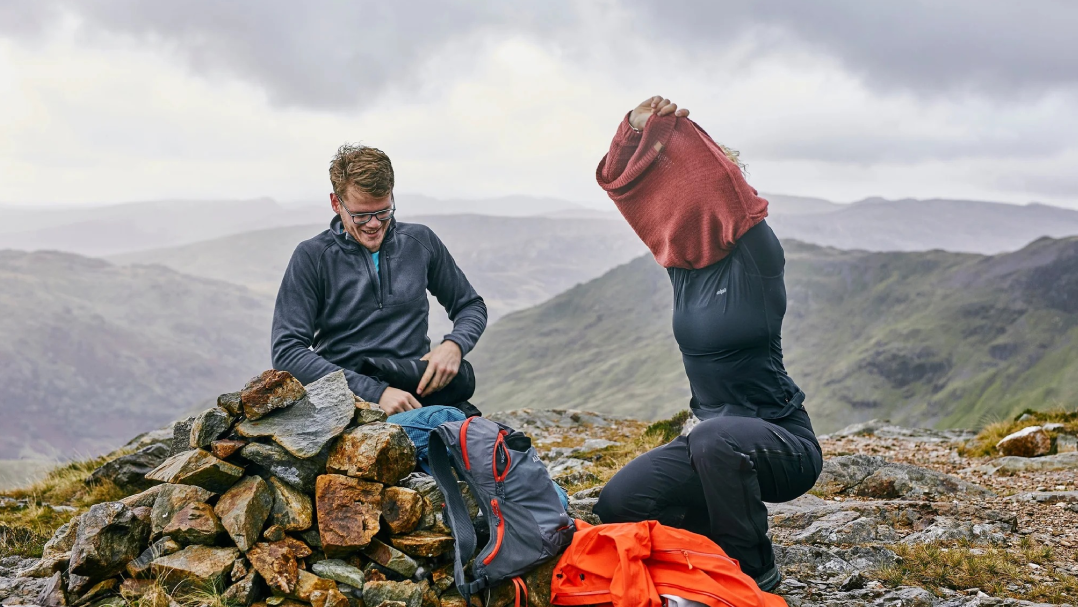
The worst outdoor clothing advice I ever received was “just wear what’s comfortable.” That person had clearly never been caught in a mountain rainstorm wearing a cotton hoodie. Outdoor clothing works as a system. Each piece has a specific job, and when the system is assembled correctly, it manages your body temperature and moisture across a huge range of conditions.
The Three-Layer System — Why It Works
Base Layer: Moisture Management
Sits against your skin. Its job is wicking sweat away from your body so it can evaporate rather than sitting cold against your skin. The critical rule: never cotton as a base layer. Cotton absorbs moisture and holds it. In cool weather, a wet cotton shirt against your skin leeches heat at a rate that can become dangerous. Merino wool or synthetic only.
Mid Layer: Insulation
Sits over the base layer. Traps body heat. This is your fleece jacket, down vest, or puffy jacket. It doesn’t need to stop wind or rain — that’s the next layer’s job. It just needs to hold warmth efficiently.
Outer Shell: Weather Protection
Blocks wind, sheds rain, keeps the insulating mid layer dry so it can do its job. A wet mid layer loses most of its insulating ability, so the shell is protecting the entire system. You add and remove these layers as conditions change throughout the day.
Base Layers — Merino Wool vs. Synthetic
Merino wool regulates temperature, manages odor better than synthetic (critical on multi-day trips), and feels comfortable against skin. More expensive ($60–$100), takes longer to dry when fully wet. Synthetic base layers dry faster, cost less ($30–$50), and perform better for high-intensity activities. The practical split: merino for camping and multi-day hiking, synthetic for high-intensity single-day activities.
Mid Layers — Fleece vs. Down vs. Synthetic Insulation
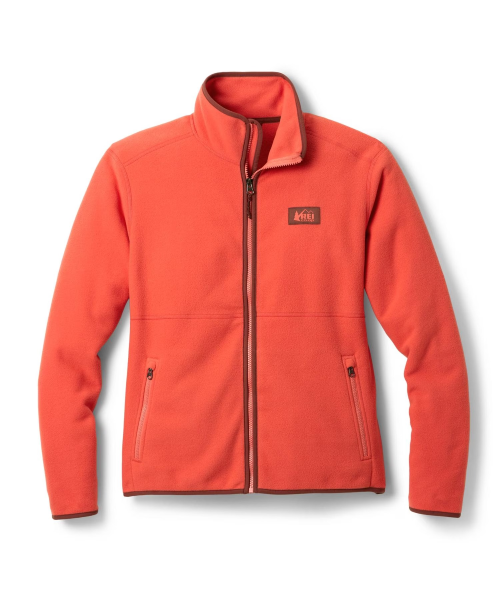
Workhorses of the mid layer category. Breathe well during active output, dry fast when wet, work in a wide range of temperatures. Don’t compress very small and don’t block wind without DWR treatment. Patagonia Better Sweater or R1 Air Full Zip are benchmarks. Budget $100–$160.
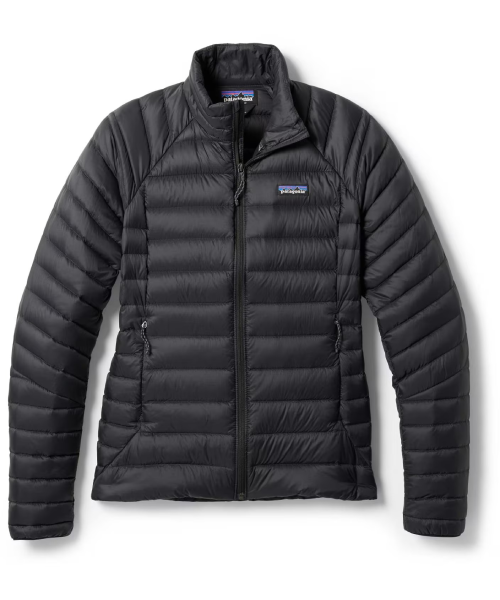
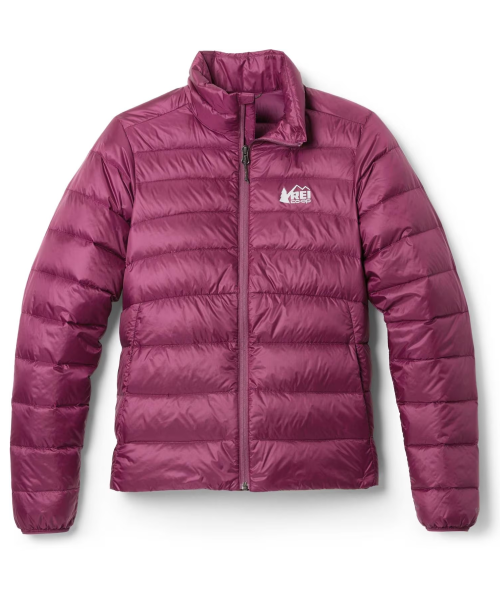
Gold standard for warmth-to-weight in cold static conditions. Packs tiny, weighs very little, incredibly warm. Loses insulating ability when wet — hydrophobic treated down (Patagonia DownSweater) improves this. Best used under a waterproof shell. Budget $180–$280.
Polyester fiber fill that insulates even when damp. Heavier and bulkier than equivalent down but more reliable in wet conditions. Patagonia Nano Puff ($220–$250) and Arc’teryx Atom Hoody ($260–$300) are premium recommendations. REI Co-op Magma series at $150–$180 offers good value.
Rain Jackets — What to Actually Look For
A rain jacket is possibly the single most important piece of outdoor clothing you own. Key features: fully seam-taped (not just critically taped), adjustable hood with wired brim, pit zips for ventilation, packability into its own pocket.
Rain Jacket | Price | Type | Best For |
Marmot Precip Eco | $100–$120 | Hardshell | Budget, fully taped seams |
REI Co-op Rainier | $170–$190 | Hardshell | Mid-range all-conditions |
Patagonia Torrentshell 3L | $249 | Hardshell | Premium versatility |
Arc’teryx Beta LT | $450–$500 | Gore-Tex Pro | Serious alpine use |
The Cotton Rule — One Final Time
“Cotton kills” in outdoor circles is not hyperbole. When cotton gets wet — from rain, sweat, stream crossing — it loses virtually all insulating ability and stays wet for a very long time. In temperatures below 50°F with any wind, wet cotton can drop your core temperature dangerously. Check your base layer and mid layer materials before any serious outdoor trip. Polyester, nylon, merino wool, down — fine. Cotton — leave it at home.