
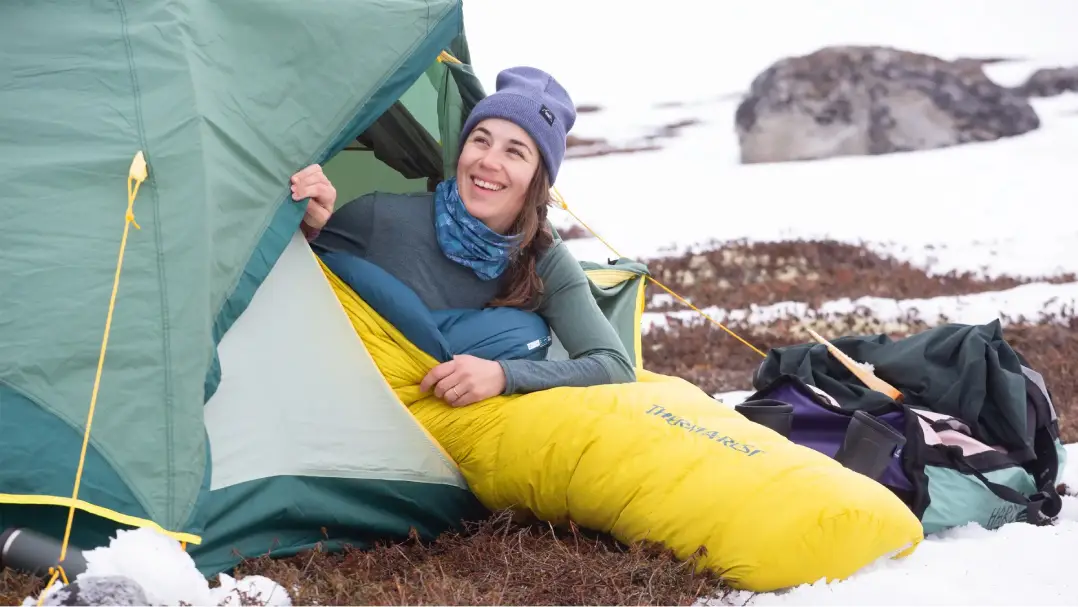
Let me tell you what bad sleeping bag advice looks like. It looks like an article that tells you to “check the temperature rating” without explaining that the temperature rating is almost meaningless without context. Your sleeping bag is the difference between waking up genuinely rested and waking up stiff, cold, and quietly wondering why you do this to yourself.
The Temperature Rating Problem Nobody Explains Properly
Every sleeping bag has a temperature rating — 20°F, 32°F, 45°F. These ratings are standardized EN/ISO lab tests. They measure Comfort (the temperature at which the average woman can sleep comfortably) and Lower Limit (the temperature at which the average man can sleep comfortably). The “rating” you see advertised is usually the Lower Limit — which is a survival metric, not a comfortable sleep metric.
The working rule: Buy a bag rated 10–15°F lower than the coldest temperature you realistically expect. If you sleep cold naturally, go 20°F lower. That buffer exists for a reason — use it.
Down vs. Synthetic: The Honest Comparison
Down Fill
Down bags are lighter, compress smaller, and last longer with proper care. Quality is measured in fill power — 550, 650, 700, 800, 900. Higher fill power means lighter and more compressible for the same warmth. The problem: down loses almost all insulating ability when wet. Hydrophobic down treatments (DownTek, Nikwax) improve wet performance but don’t fully match synthetic in truly wet conditions.
Synthetic Fill
Synthetic bags insulate even when wet, dry faster, cost less upfront. They’re heavier and bulkier than down equivalents and break down faster — synthetic bags lose loft noticeably after a few years of heavy use. For casual car campers who can keep their bag dry: synthetic is perfectly fine and more affordable.
Best Sleeping Bags by Category
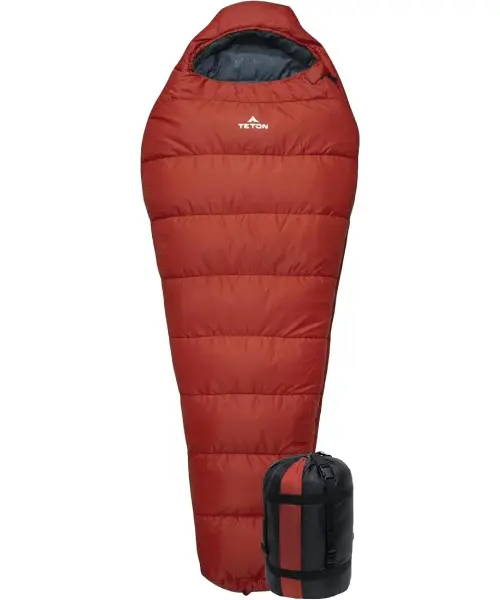
Rated to 0°F, comfortably warm to about 20°F, comes with a compression sack. Heavy and bulky for backpacking, but for car camping on a budget, it’s one of the best values in the category.

850-fill hydrophobic down, 15°F version weighs about 1 lb 12 oz, packs to roughly the size of a large grapefruit. Continuous-baffle construction eliminates cold spots. A legitimate long-term investment bag for anyone who camps more than occasionally.

600-fill down — lower than premium bags but meaningfully lighter than synthetic at this temperature rating. Semi-rectangular shape gives you sleeping room without sacrificing too much warmth. Good for backpacking beginners who want to try down without the $300+ commitment.
Sleeping Bag Care — The Part People Skip
Wash in a front-loading machine (never top-loading agitator) on gentle/delicate. For down: use Nikwax Down Wash Direct and tumble dry on low with clean tennis balls to break up clumping. This takes 2–3 dryer cycles — do not rush it. Store loosely in a large mesh storage sack or hanging in a closet. Never store compressed long-term. Compressed fill loses loft permanently over time.