
There’s a specific satisfaction to eating a properly cooked meal at a campsite that you just don’t get from ripping open a protein bar on a trail. Hot coffee at sunrise when it’s 45°F outside. Scrambled eggs with vegetables at a mountain campsite. A proper pasta dinner after a 12-mile day of hiking. These things are possible, they’re not complicated, and they don’t require hauling a restaurant’s worth of equipment into the woods.
Car Camping Kitchen vs. Backpacking Kitchen
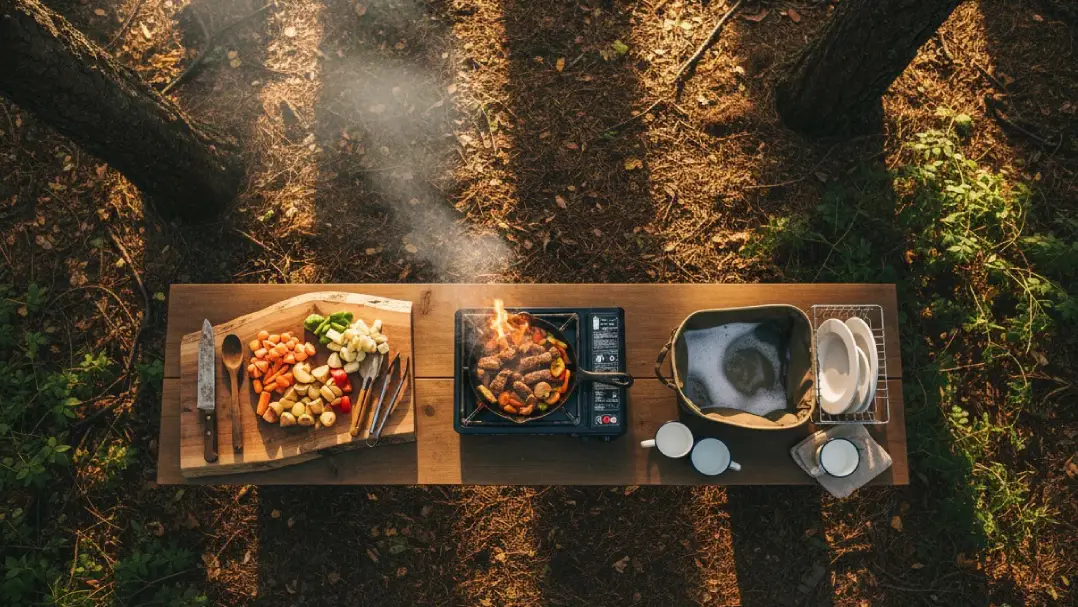
Car camping means weight is irrelevant. You can bring a two-burner propane stove, a full pot set, a cutting board, a cast iron pan. You can cook essentially anything you’d make at home. Backpacking cooking means every ounce matters — your entire kitchen should weigh under a pound and a half if possible. Buy for the style you’re actually doing, not the aspirational one.
Best Camp Stoves
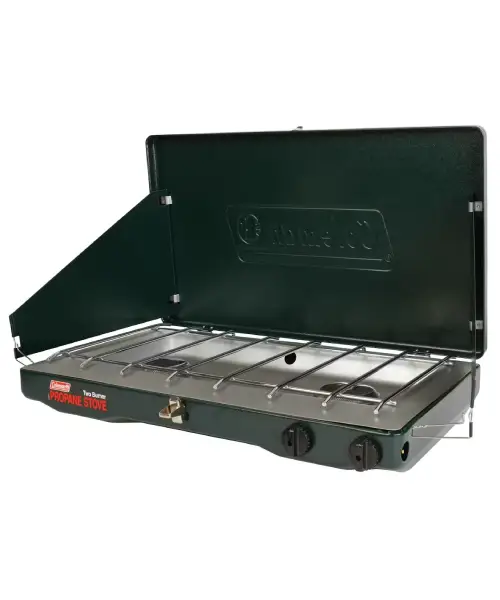
A campground staple that just works. Runs on standard 1-lb propane canisters, outputs about 20,000 BTUs across two burners, cooks like a regular gas stove. Wind is the main enemy — bring a windscreen or orient your stove to use natural terrain as a wind block. The upgrade: Camp Chef Explorer Two-Burner at $120–$140 for serious camp cooking.
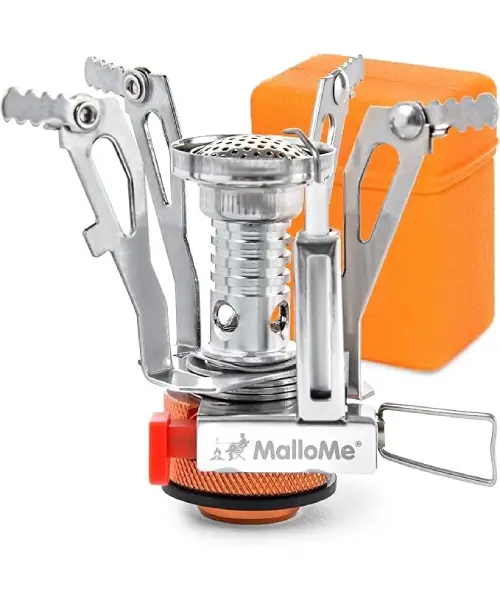
MSR PocketRocket 2 ($50): weighs 2.6 oz, boils a liter in 3.5 minutes, has been the benchmark canister stove for years. BRS-3000T ($15–$20): weighs under an ounce and performs similarly in good three-season conditions. For longer trips where fuel efficiency matters, integrated systems like Jetboil Flash or MSR Windburner ($100–$130) dramatically reduce fuel consumption.
Best Camping Cookware
For Car Camping
GSI Outdoors Pinnacle Camper series ($80–$100) includes a large pot, frying pan, and nesting lids. Nonstick makes cleanup significantly easier. A cast iron Dutch oven (Lodge, $40–$60) is the car camping luxury item that dedicated camp cooks swear by — heavy but produces genuinely excellent one-pot meals: stews, chili, cobblers.
For Backpacking
One pot is your kitchen. Snow Peak 700ml Titanium Cup ($45–$55) is a cult object in lightweight circles — 4 oz, does everything from boiling water to eating from directly. Any 1-liter aluminum pot from GSI or Toaks in the $15–$30 range works perfectly well. A titanium spork ($8–$12) and you’re done.
Food Storage
Storage Type | Best For | Cost | Notes |
Premium Hard Cooler (Yeti/RTIC) | Week-long car camping | $200–$400 | 5–7 days ice retention |
Standard Coleman Cooler | Weekend car camping | $40–$60 | 2–3 days ice retention |
Bear Canister (BearVault BV500) | Backcountry bear country | $80 | Required in many areas |
Ursack Kevlar Bag | Lightweight alternative | $90–$100 | Check area regulations |
Kitchen Accessories That Actually Matter
- Collapsible silicone containers — takes almost no space, solves real storage problems
- Biodegradable soap — Dr. Bronner’s Sal Suds, required for Leave No Trace
- Lightweight cutting board — a thin flexible mat weighs nothing and makes prep easy
- Camp knife — Victorinox Swiss Army or Morakniv Companion ($15–$20)