
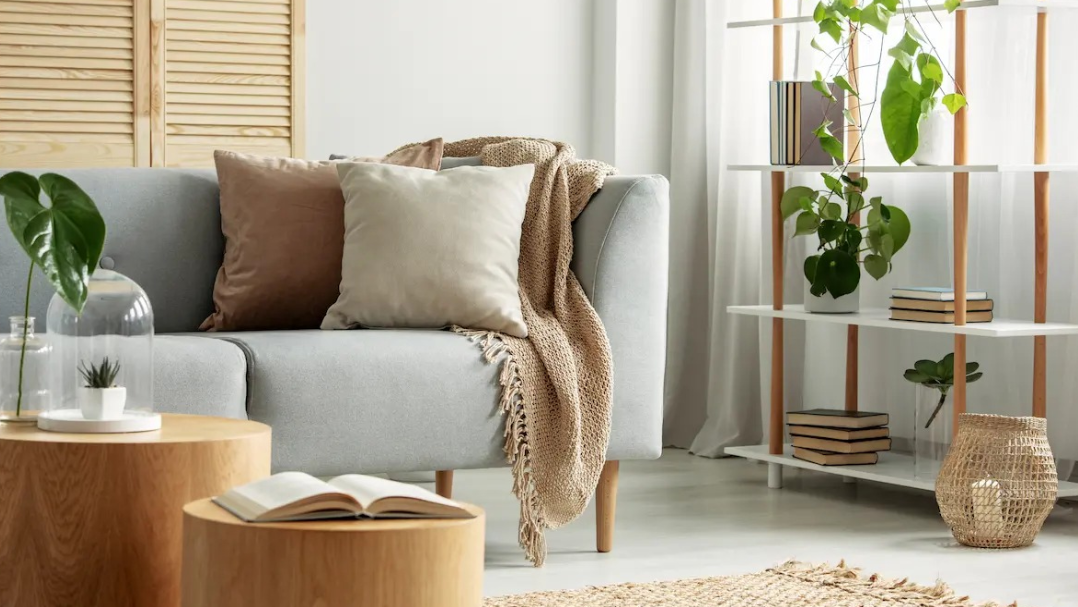
The first apartment I decorated on my own took about three years to actually feel like mine. Not because I was waiting for the right moment or saving up for something special. Mostly I just kept second-guessing every decision and telling myself I’d figure it out eventually. The walls stayed bare. The sofa sat on a rug that was clearly too small. The overhead light did its flat, cheerless job every evening while I watched TV and tried not to think about how little the place felt like anywhere in particular.
What eventually changed things wasn’t a big purchase or a decorating project. It was buying a rug that actually fit the room, swapping out one overhead bulb for something warmer, and adding a floor lamp in the corner that I use almost every single night now. The total cost was somewhere around $200 stretched across maybe four months. The difference in how the room felt was not proportional to that number.
That’s basically what this guide is about. Not the aspirational version of home decor where every room looks like a photoshoot and nothing has ever been sat on. The practical version — a few specific products that actually change how a space feels, bought in a sensible order, without requiring you to have a budget or a vision board or a particularly strong opinion about interior design.
What Actually Makes a Home Decor Product Worth Having
Before getting into specific things to buy, it’s worth being honest about what “good decor” even means because a lot of home decor content muddies this pretty badly. The products that end up genuinely improving a room are almost always the ones that change how the room feels to be in, not just how it looks in a photo. These are different tests, and they produce different answers.
Something that photographs beautifully but requires removing every decorative pillow before you can sit on the sofa is not actually improving your daily experience of that room. A throw blanket that gets draped over you three evenings a week is doing more real work than a ceramic sculpture that people compliment once and then you dust around forever. The test is daily life, not a camera.
Warmth and texture are the two qualities that consistently separate rooms that feel good from rooms that look fine. When your eye moves around a room and finds things at different heights, different textures, different scales — a soft thing next to a hard surface, a natural material beside a painted wall — the room feels lived-in in a way that uniformly smooth surfaces never quite achieve. This isn’t about spending money. It’s about variety of texture, and you can create it at almost any price point.
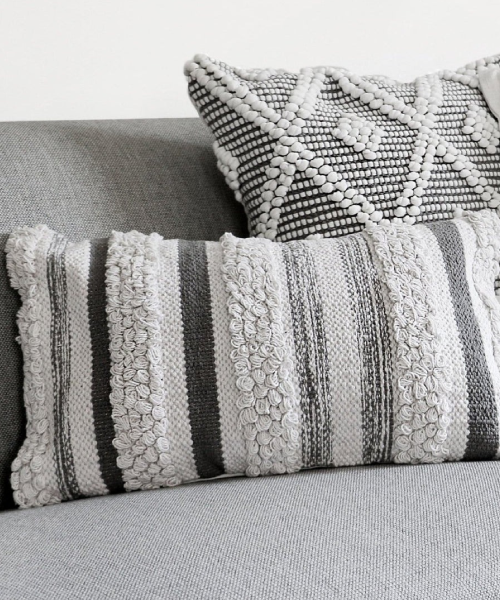
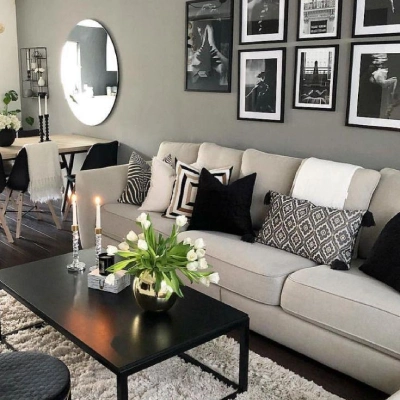
Throw pillows are the fastest room change available to anyone. A sofa that looks like it came with the apartment yesterday can feel personal and considered with two or three well-chosen pillow covers on it. The reason this works is texture as much as color — a rough linen pillow next to a softer cotton cushion adds the kind of visual depth that the naked sofa cushions underneath never have.
In 2026 the direction has moved pretty clearly away from the matched set where everything coordinates too perfectly and toward something more layered. Earthy tones are everywhere — terracotta, warm rust, dusty olive, deep cream, warm brown — and they work because they sit well against both light and dark sofas without screaming for attention. The textures getting the most play are linen weaves, boucle, and chunky knit, all of which photograph well but more importantly feel good in your hands when you’re actually on the sofa.
Buy covers rather than filled pillows whenever you can. An IKEA insert for $6 does the exact same job as a $25 premium insert. The cover is where every dollar of visual impact lives. Changing a room seasonally or when you get bored of a color means swapping covers, not the whole pillow.
Two or three covers on a standard sofa is the practical answer. More than four and you’re rearranging them every time someone sits down, which means half of them live on the floor most of the time. The number that actually works in daily life is smaller than the number that looks best in a showroom.
For accessible, decent-quality covers: Amazon linen in solid earthy tones runs $8 to $14 each and looks more expensive than it costs. H&M Home sits at $15 to $22 with noticeably better fabric. Target’s Studio McGee range is $18 to $35 and the design quality tends to be genuinely good for the price.
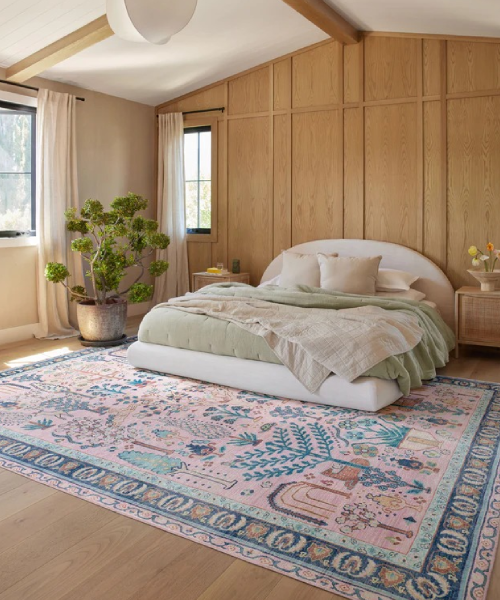
The area rug is probably the single purchase with the most impact on how a room reads, which is why getting the size wrong is such a visible and persistent problem. A rug that’s too small — and they’re almost always too small — looks like a bath mat dropped in the middle of the room. All main seating pieces need their front legs on it, at a minimum. Most rooms need a larger rug than the one people initially consider buying.
What a properly sized rug actually does for a room is define it. An open-plan living area without a rug is just floor. The same space with the right rug suddenly has a zone — a defined area that says “this is the part of the room where people sit.” The acoustic effect is real too. Hard floors are echoey in a way that makes spaces feel emptier and colder than they are. A rug absorbs some of that and the room feels quieter and more settled.
Shopping for rugs online is genuinely difficult. The color and texture that shows up on a screen is not reliably what arrives in a cardboard tube. Buy from somewhere with a real return policy and plan to use it. The proportions that look right on your actual floor are almost always larger than what looked right in the product photos.
For households where a rug needs to survive pets or children: Ruggable’s washable two-piece system at $150 to $250 for a 5×8 is the honest recommendation. The designs have improved considerably and the machine-washable aspect is not a minor convenience feature, it’s the whole point for anyone whose floor regularly has to deal with things that stain. For households that can maintain a standard rug: Loloi through Wayfair in the $180 to $400 range for a 5×7 offers quality that holds up and colors that are accurate to the photos.
The one category where budget genuinely matters: rugs. A $50 discount rug sheds for months, flattens within a year, and looks exactly as cheap as it costs in person. Almost every other item in this guide has a legitimate budget option. Rugs don’t really, below a certain threshold.
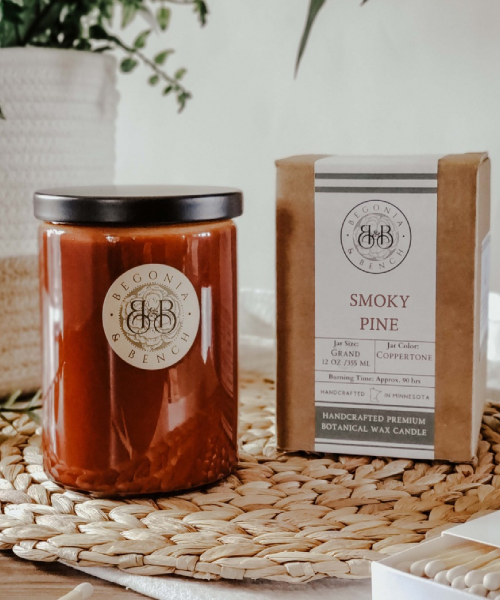
Scent is the most underused tool in home decor and one of the most immediately effective. Visual decor affects what you see when you walk into a room. Scent affects how you feel before you’ve consciously registered anything. A room that looks good but smells like nothing in particular is missing something a room with a consistent, considered fragrance has.
The 2026 direction in home fragrance has moved away from the clean linen and ocean breeze profiles that were everywhere for a few years and toward warmer, more grounded scents — cedarwood, sandalwood, tobacco mixed with amber, warm fig, bergamot. These scent profiles match the broader interior design shift toward warmer, darker, more personal spaces. They smell like somewhere specific rather than somewhere generic.
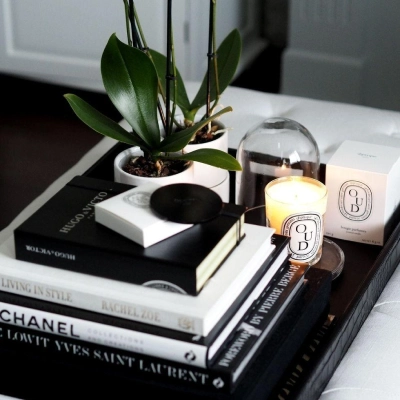
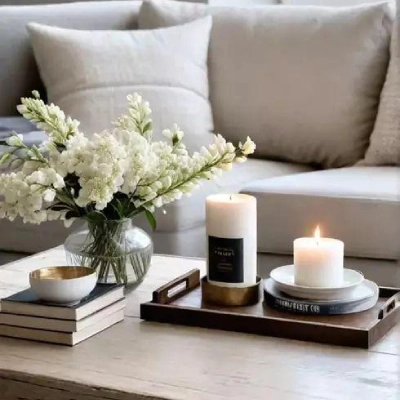
P.F. Candle Co. at $22 to $26 has the best combination of scent quality and honest burn times I’ve found at this price. The glass jar is clean without being decorative in a way that competes with the rest of the shelf. Homesick at $34 to $38 costs more but the scent throw is genuinely better — they fill a room more effectively than most candles at lower price points. For everyday home scenting on a limited budget: Target’s Threshold Apothecary range at $8 to $14 performs better than the price suggests. Several of the scent profiles are actually good.
One thing worth saying clearly: scent preference is personal in a way that nothing else in this guide is. “Warm and woodsy” reads completely differently to different people. Buy candles in person when you have the option. When you can’t, buy from somewhere with returns or stick with brands that write detailed, accurate scent notes
.

Blank walls are one of the most common and most persistently unresolved home decor situations. People notice the emptiness and mean to do something about it for months or years and never quite get there because the anxiety about getting it wrong feels larger than the problem it would solve.
The single insight that simplifies most wall art decisions: one large piece works better than several small ones in most rooms. A properly scaled print or canvas on the main wall of a room reads as a deliberate choice. Five small frames scattered around the same wall at different heights and in different frames reads as things that accumulated without a plan. Start with one thing. Make it large enough to actually register on the wall.
Scale is where almost everyone gets it wrong the first time. Before ordering anything, tape together some newspaper or paper bags in roughly the dimensions you’re considering and hold it against the wall. What looks substantial on a product listing page often looks small on an actual wall. The size that looks right taped up there is usually larger than what you were planning to buy.
The most practical option for decent wall art at reasonable cost: downloadable print files from Society6 or creative sellers on Etsy cost $2 to $8. A local print shop can print them at whatever size you need, usually $15 to $25 for a large format. Frame in an IKEA RIBBA at $8 to $25. The whole thing comes to under $45 and looks considerably more than that. For physical prints with strong quality: Minted at $35 to $80 carries work from independent artists across a wide range of styles, and the paper and printing quality is genuinely good.
The 2026 direction in wall art: botanical illustrations, earthy abstract work, black and white photography, and anything that feels personal rather than mass-produced. The over-curated gallery wall aesthetic is giving way to something more individual — a single print that means something or reflects genuine taste.
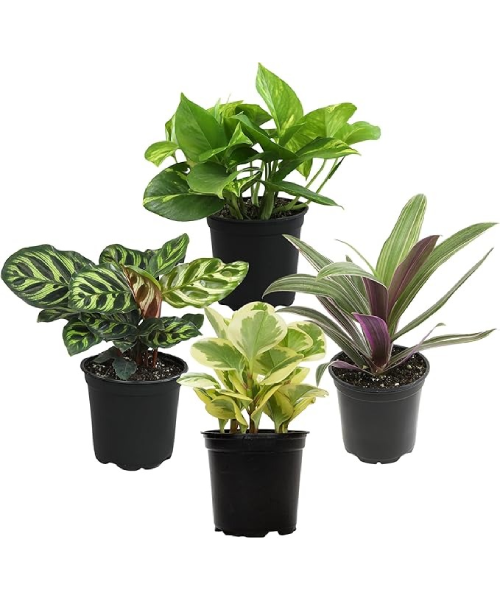
Plants do something for a room that manufactured decor can’t fully replicate. They’re alive. They change slowly over time. They respond to how you treat them. A room with healthy plants in it feels occupied in a way that even very well-decorated plantless rooms sometimes don’t quite achieve.
The self-assessment matters before buying anything in this category. If you travel frequently, have pets that eat foliage, or have killed multiple plants before, certain options are not going to work for you regardless of how much you want them to. The good news is that the category is broad enough to include options for almost every situation.
For people who have a poor track record with plants: the Pothos is the answer. It tolerates low light, forgives forgotten watering, trails beautifully from a shelf or hanging planter, and costs $5 to $15 at grocery stores and garden centers. The Snake plant is the backup option — even less demanding, clean upright form, handles genuinely dark corners that most plants won’t survive.
For people who want something with real visual presence in the room: a medium Monstera at $25 to $45 from a local nursery makes an impact in a corner with indirect light. It grows noticeably if you water it weekly and it gets some natural light, and it looks better as it grows.
The pot makes a bigger difference than most people expect. A good plant in its original plastic nursery container looks like something that just came home from the store. The same plant in a textured ceramic or terracotta pot looks like it was chosen and placed deliberately. Budget $10 to $20 for the pot and consider it part of what you’re buying.
Budget vs. Premium
Throw pillow covers is the category where budget makes almost no difference — an $8 linen cover and a $30 cover serve the same visual function. Rugs is the category where budget makes the most difference — a $50 rug looks like a $50 rug. Candles land somewhere in the middle; the scent quality at $8 to $14 is fine for occasional home fragrance but the $22 to $38 range throws scent more effectively into a room. Wall art is almost entirely solved by the downloadable print approach for anyone willing to go to a print shop. Plants are the one category where starting cheap is always the right move until the habit is proven.
What Not to Buy
Matched decorative sets where every piece in a room came from the same collection. It looks like a showroom, not a home. Buying things specifically because they’re currently trending on design social media — once a specific aesthetic is everywhere on Instagram, its lifespan in actual rooms is shorter than it looks. Very small decorative objects in quantity, the kind that fill a shelf or a console table with things that don’t individually add much. Ten $5 items adds up to $50 and produces a room that reads as cluttered rather than decorated. One $50 item with actual visual presence does more.
Final Recommendation
For anyone starting fresh or refreshing a room that never quite came together: rug first to anchor the space and define it, then throw pillows to add warmth to the main seating piece, then one real piece of wall art that makes the biggest bare wall feel finished. Candles and plants come after that — they’re the atmospheric layer that sits on top of a room that’s already working.
None of this requires expertise or a large budget spread across one purchase. It requires some patience with the process, willingness to return things that don’t work, and a preference for fewer better things over more mediocre ones. The rooms that feel genuinely good to be in almost always got there gradually.