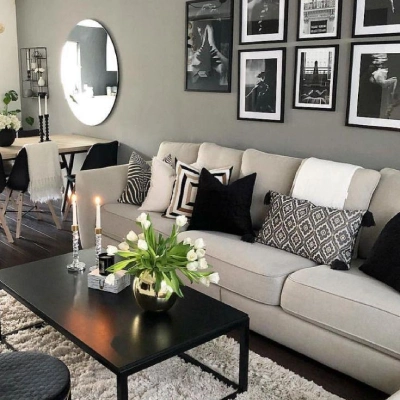

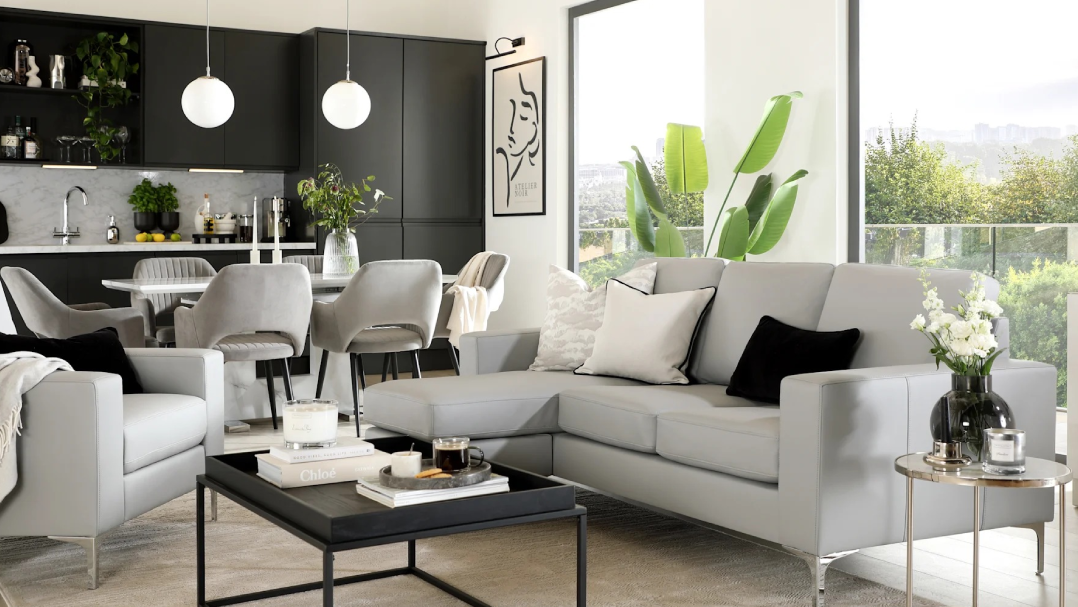
Most people’s living rooms are fine. That word covers a lot of ground. Fine means the furniture fits. Fine means there’s a rug of some kind. Fine means you can watch TV and have people over without it being embarrassing. What fine doesn’t mean is that you actually want to be there. That the room draws you in when you walk past it. That guests sit down and feel some warmth from the space rather than from the people in it.
Getting from fine to genuinely good is not a renovation project. I’ve seen it done for under $200 in a single room, and I’ve seen people spend three times that without closing the gap at all. The difference isn’t money. It’s understanding which specific things actually matter for how a room feels, and not wasting budget on the things that don’t.
This guide is specifically for people working with a real constraint — time, money, or both. Not the aspirational version of a living room refresh. The practical one.
Why Living Room Decor Feels Hard to Get Right
Living rooms are harder than other rooms because they’re asked to do too many things. Comfortable for one person reading alone, suitable for hosting a group, appropriate for watching something in the evening, visually okay in both daylight and after dark. Most rooms have one main purpose that their design can be organized around. Living rooms have four or five, and the decor choices that serve one don’t always serve the others.
The mistake most people make is trying to solve all of these simultaneously. They buy things that are supposed to work for everything and end up with things that work for nothing particularly well. The better approach is identifying the single biggest thing your living room lacks — warmth, atmosphere in the evenings, a feeling of definition, something personal on the walls — and addressing that specifically before doing anything else.
One room problem solved completely is better than four room problems addressed inadequately.
What Makes a Living Room Actually Cozy
Coziness in a room is mostly about light and texture. Not furniture, not color necessarily, and not the quantity of decor. Rooms that feel warm and inviting almost always have multiple light sources at different heights, with warm-toned bulbs, and soft textured surfaces that the eye moves across and finds interesting rather than uniform.
The overhead ceiling light that most living rooms rely on is the enemy of this. It’s flat, it comes from one direction, and it creates the kind of even illumination that reads as a workspace rather than a living space. An overhead light dimmed to 40% does more for the evening atmosphere of a living room than a new sofa. A floor lamp in the corner doing most of the work in the evening changes the entire feeling of the room.
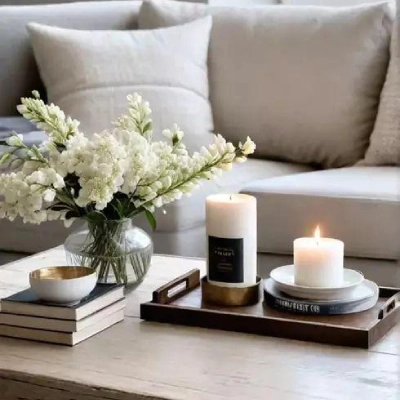
Texture works similarly. A cotton throw blanket draped over a sofa arm, a rug with visible pile, a ceramic pot on a plant — these are things your eye stops on and finds interesting rather than passing over. A room full of smooth, uniform surfaces can have everything technically right and still feel cold.
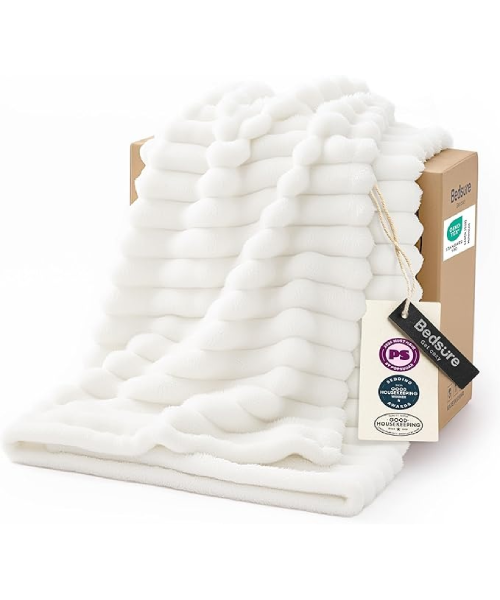
A throw blanket is the one living room purchase I’d make before almost anything else because it’s genuinely dual-purpose in a way very few decor items are. It sits on the sofa arm looking like a considered layer of texture and color during the day, and three evenings a week someone actually pulls it over their legs while watching something. The decorative function and the practical function are the same object.
For a cotton waffle-weave throw in the $35 to $55 range: the texture is visible from across the room, it holds its shape draped over an arm rather than slipping off, it washes easily, and it doesn’t pill badly the way some cheaper cotton blends do within a few months. For the budget end: IKEA’s POLARVIDE throw at $8 to $10 is one of those specific exceptions where cheap doesn’t feel or look cheap. It’s genuinely soft, washes well, and works in any room as a starting point while you figure out what you want.
The color choice matters more than most people think. A throw that blends into the sofa color disappears. A throw that creates some contrast — warmer against a gray sofa, a dusty olive against a beige one — reads as a deliberate layer of warmth rather than a lump of fabric. It doesn’t need to be dramatically different, just different enough to register.
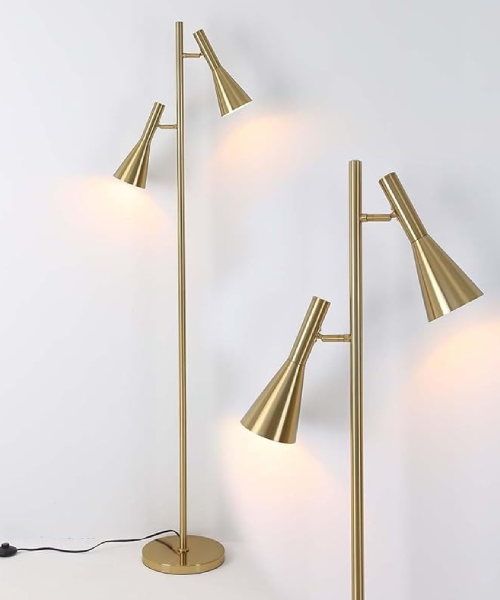
The single change that most dramatically improves how a living room feels in the evenings is adding a floor lamp. A room lit entirely by an overhead fixture has flat, directionless light that feels like a waiting room regardless of everything else going on with the decor. A floor lamp in a corner creates a pool of warm light at a different height, and the room suddenly has visual depth and atmosphere that overhead lighting cannot create.
An arc floor lamp with a wide shade in the $65 to $90 range lights a seating area from above at a human scale — not too bright, positioned to read or watch TV by rather than to illuminate a workspace. A rattan or woven bamboo floor lamp in the $60 to $100 range adds texture alongside the light, which makes it earn its keep visually during the daytime too when it’s just sitting there as an object in the corner.
The bulb matters here. The warmest LED available — 2700K — makes this work. A cool white bulb in a floor lamp is still a clinical, flat light source. Warm white in the same fixture is a completely different experience. This $3 to $5 swap on any lamp you already own is worth mentioning because it makes a visible difference before you spend anything on new fixtures.
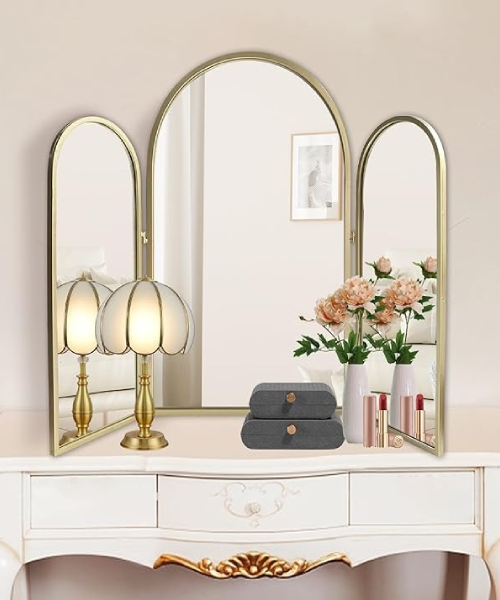
Mirrors in living rooms don’t get mentioned enough in budget decor guides. In smaller rooms or rooms with limited natural light, a properly placed mirror can do something no other single decor item does — it doubles the apparent light in the room by reflecting the window back into the space. The same room, with the same lamp and the same daylight, looks brighter and larger with a mirror on the wall opposite the window.
Beyond the functional light benefits, the arch-shaped and irregularly-framed mirrors that are very much in the 2026 direction add visual personality in a way that a standard rectangular framed piece doesn’t. The silhouette of an arched mirror on a wall reads as a design decision rather than just a functional object. IKEA’s arch mirror range lands between $50 and $80. The options at Wayfair in the $80 to $150 range go further in terms of visual presence and material quality.
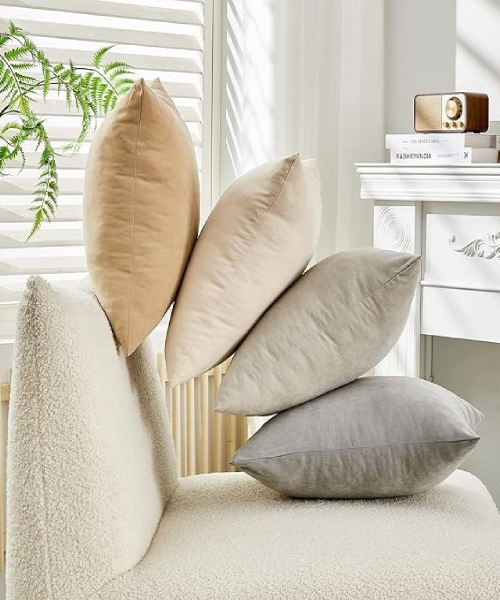
Already covered these in the first blog but they’re worth a specific mention in the living room context because the sofa is the dominant surface of most living rooms and throw pillows are genuinely the fastest way to change how the main surface of the room reads. Two or three covers in earthy 2026 tones — terracotta, warm rust, dusty olive, warm cream — on an otherwise plain sofa shifts the entire feeling of the room toward something warmer and more personal.
The practical note: buy pillow covers rather than full pillows, and buy inserts from IKEA for $6 each. Swap covers when you want a change without buying new pillows. The visual impact is entirely in the cover and the insert is purely structural.

One medium-to-large plant in a ceramic pot, placed somewhere it can actually be seen — beside the sofa, in a corner with some light, on a surface at eye level — does more for a living room than several small plants scattered across various surfaces. A Pothos in a hanging planter at $15 to $25 total, a Snake plant in a textured pot in a darker corner, or a medium Monstera beside a window with indirect light at $35 to $60 total with pot. The room feels occupied in a way that even the most thoughtfully decorated plantless room sometimes doesn’t.
Budget Breakdown
If you’re working with a specific number: $150 gets you a floor lamp ($65), a throw blanket ($35), and two throw pillow covers ($20 each) which changes the evening atmosphere and the sofa warmth considerably. Adding a mirror ($60 to $80) and a plant ($20 to $40) takes the total to $230 to $270 and produces a room that feels genuinely considered. That’s the real-world budget for a meaningful living room refresh in 2026.
What Not to Buy
Matching furniture sets where the sofa, rug, and occasional chairs are all from the same collection in the same finish. It looks like a catalog floor, not a room someone lives in. Very cheap rugs — the rug caveat applies more in living rooms than anywhere because the floor is seen more constantly. Trendy statement pieces you don’t actually like beyond their current popularity, because the trend will move before your next decorating project does.
Final Thoughts
The living rooms that feel genuinely good to be in share a few things that have nothing to do with budget. They have warm light from more than one source. They have something soft to look at and something soft to touch. They have at least one thing that feels chosen rather than defaulted to. Getting there doesn’t require a significant spend or a particular design sensibility. It requires paying attention to those specific things and addressing them one at a time until the room feels right.