
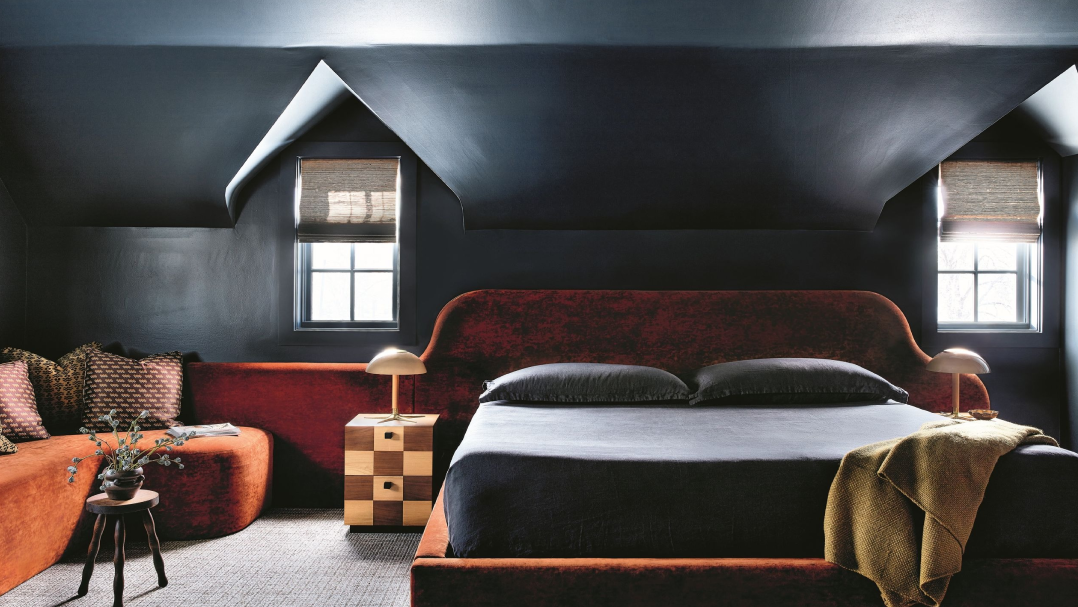
The bedroom tends to get decorated last and thought about least, which has always seemed backwards to me. It’s the room you wake up in. What you see in the first few seconds after opening your eyes sets something for the rest of the morning that’s hard to shake. And it’s the room you look at for a few minutes before falling asleep, which has its own quieter effect on how you end the day.
Most people are living in bedrooms that function well and feel unremarkable. Bed, dresser, maybe a bedside table. The walls might be blank. The lighting might be the same overhead fixture doing the same inadequate job it was doing the day the person moved in. Nothing is wrong exactly. The room just hasn’t had any real attention paid to it.
The good news about bedroom decor specifically is that the room sees fewer visitors than any other space in the house, which means the pressure to get it “right” for other people is almost zero. Every decision can be made entirely for the person sleeping there. That’s a more honest design brief than most rooms get.
Why Bedrooms Are Different to Decorate
Bedrooms are private in a way other rooms aren’t, and that privacy changes what matters. You’re not performing the room for visitors. You’re living in it alone, in the early morning before you’ve fully woken up and in the evening when you’re tired. Those are different conditions from the way people interact with living rooms or kitchens, and they call for different priorities.
Comfort comes first. Then atmosphere at the two times of day you’re most sensitive to your environment. Then personality, in the form of a few specific things that make the space feel like it belongs to the person sleeping in it rather than like a hotel room that could be anyone’s.
The products that serve these priorities are different from the products that would top a living room list. Bedding matters more here than anywhere. The bedside lamp matters more than in any other room. The blackout situation matters. The rug underfoot in the morning matters.
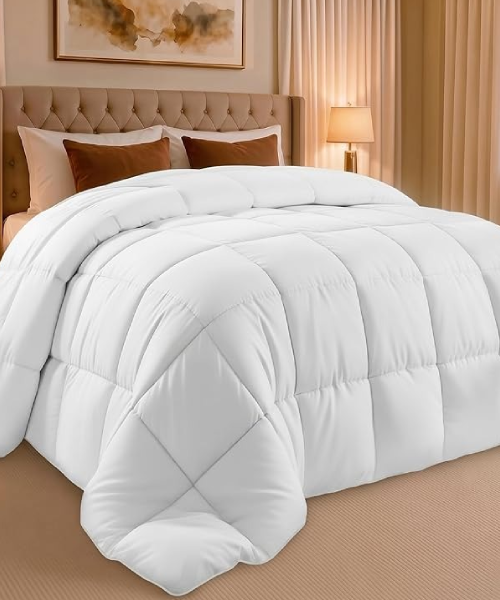
The single most impactful bedroom purchase is the thing covering the bed, which happens to be the largest visual surface in the room. Good bedding makes a bedroom. Bad bedding — pilling fabric, an unflattering color, something too thin to drape properly — undermines everything else regardless of how well the other elements are handled.
In 2026 the direction in bedding is toward natural materials and warmer tones. Linen and cotton-linen blends dominate because of how they feel to sleep in and because of how they look slightly rumpled on an unmade bed in a way that reads as intentional rather than sloppy. The colors getting the most traction are warm neutrals — oatmeal, warm white, dusty sage, terracotta, clay — rather than the bright crisp white that was everywhere for the better part of a decade.
Quince makes linen duvet covers and sheet sets that price at $50 to $120, which is genuinely unusual for real linen quality. Most linen bedding at comparable quality runs two to three times that. The colors are well-chosen, the fabric improves with washing rather than deteriorating, and the drape is right. Target’s Threshold Organic Cotton percale range at $30 to $60 for a sheet set is the budget answer for everyday use — the fabric is genuinely soft out of the wash and holds up.
On decorative pillows specifically: a bed with ten decorative pillows that need to be removed before sleeping has an aesthetic that works for photography and an actual daily experience that doesn’t. Two sleeping pillows, two European shams for the daytime look, one or two accent pillows at most. That’s a bed you can get into without moving half the furniture first.
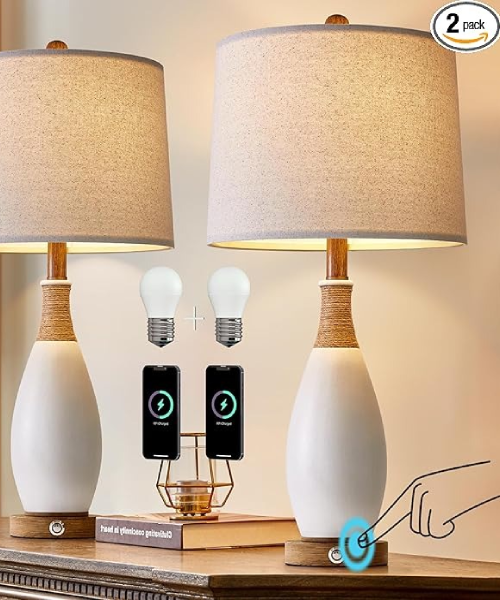
Most bedroom overhead lights are wrong for the evening. They’re too bright, they come from the wrong direction, and the quality of light they produce is calibrated for seeing clearly rather than for winding down. A bedside lamp with a warm-toned bulb and a shade that diffuses the light creates a completely different evening environment. The overhead light goes off after 9 PM. The bedside lamp does the rest.
This is one of those changes where the functional improvement and the atmospheric improvement are the same thing. Better light for reading, better atmosphere for the room, better conditions for transitioning toward sleep. The investment is $40 to $80 and it returns daily.
For budget: TaoTronics and Brightech both make bedside lamps in the $35 to $50 range that do the job without competing with the rest of the room for visual attention. For something with more presence: a ceramic base lamp with a linen shade in the $60 to $90 range reads as a considered choice rather than a functional object.
The bulb needs to be warm white — 2700K. A bedside lamp with a cool white bulb is still a harsh, clinical light source. Warm white in the same fixture is calm and amber-toned and actually supports winding down.
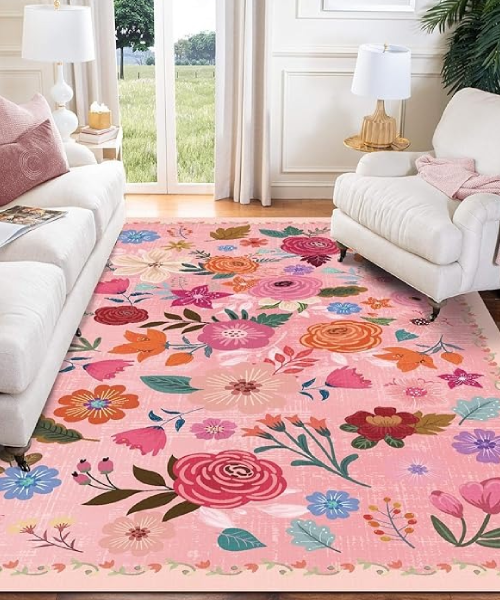
Stepping onto something soft first thing in the morning is a small quality-of-life detail that costs money once and returns value every single day. The bedroom rug doesn’t need to be as large or as decorative as a living room rug — it needs to extend 18 to 24 inches on either side of the bed so your feet land on it when you get up rather than landing on cold hard floor.
The texture matters more here than in other rooms. A low-pile rug that works fine underfoot in a living room can feel cold and thin under bare feet first thing in the morning. Look for something with some pile depth or a softer hand. Beni Ourain-influenced rugs in the $150 to $220 range — the cream and geometric Moroccan style — work well in most bedroom styles and at most price points. They’ve been popular long enough that there are many accessible versions that look right without the premium price of the genuine article.
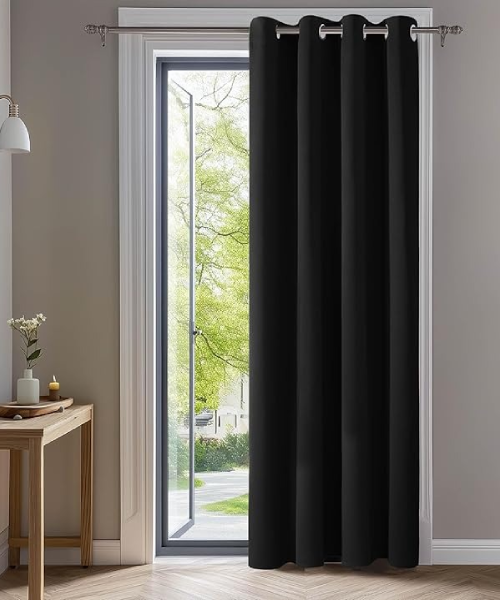
Not glamorous but one of the most functionally significant bedroom purchases for anyone whose morning light situation is waking them up earlier than they want. Light exposure in the early morning hours is a real and direct disruption to sleep. For people who wake up at dawn in summer or who live with streetlights outside their window, blackout curtains often solve the problem more completely than any amount of other sleep improvement.
The basic functional versions work. Amazon Basics blackout curtains at $25 to $35 per panel do the job. NICETOWN in the $30 to $45 per panel range come in better colors. H&M Home linen-look panels with blackout lining at $60 to $80 each look considerably more expensive than they are and serve both the functional and decorative brief.

The wall above the headboard is the most important decorative surface in a bedroom because it’s directly in the line of sight from the bed. A blank wall there makes the room feel unfinished regardless of everything else. One substantial piece of art, a set of two or three botanicals in matching frames, or a gallery arrangement that works as a single visual unit — any of these finishes the room in a way that nothing else quite achieves.
Scale is the same consideration as everywhere else. What looks right on the product page looks small on an actual wall. The piece should be roughly two-thirds the width of the headboard behind it, at most. Wider than the bed looks odd. Narrower than two-thirds of the bed looks like it was placed by accident.
What Not to Buy
Sixteen decorative pillows that need to be moved before anyone can sleep. The bed style looks incredible in hotel photography and is a minor daily irritation in a real bedroom. Very trendy wall colors without living with a sample for at least a week first — a deeply pigmented color that looks beautiful in a design photo can read very differently in your specific room with your specific light at 7 AM. Matching bedroom sets where every piece came from the same collection. They tend to feel like a showroom floor.
Final Thoughts
The bedroom deserves more attention than it typically gets, specifically because the two times of day you spend time in it — early morning and late evening — are the times when you’re most sensitive to your environment. Small improvements to those moments compound. Good bedding, a proper bedside lamp, soft floor underfoot, curtains that actually darken the room — none of these are dramatic or expensive, and they pay back daily in ways that are easy to take for granted until you experience what the room feels like without them.