
When I was setting up my first place on a genuinely tight budget, I made a mistake that I suspect a lot of people make. I spread what money I had across as many things as possible because more things felt like more progress. A $12 decorative object here, a $15 frame there, a $20 throw blanket, some $8 candles. None of it was wrong individually. Collectively, it produced a room full of things that didn’t quite add up to anything.
What would have served me better: spending the same amount of money on two or three things that actually changed how the room read, rather than distributing it across a dozen things that filled space without improving anything.
The budget isn’t the obstacle in most home decorating situations. The question of where to put it is. This guide answers that question with six specific, ordered recommendations — the changes that produce the most visible improvement per dollar spent.
What Makes Decor Look Expensive
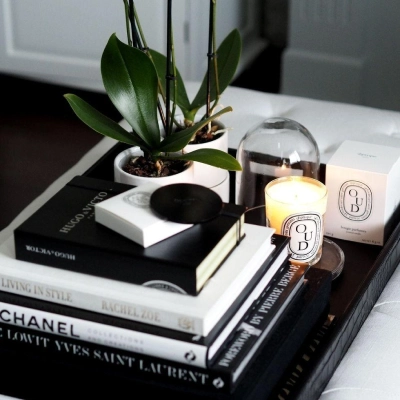
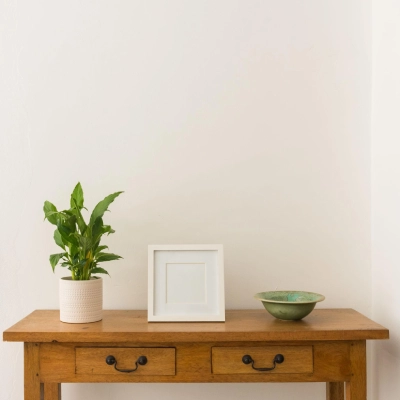
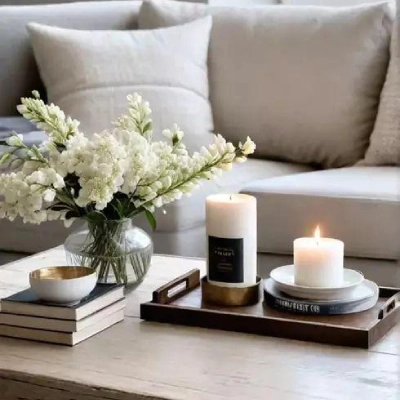
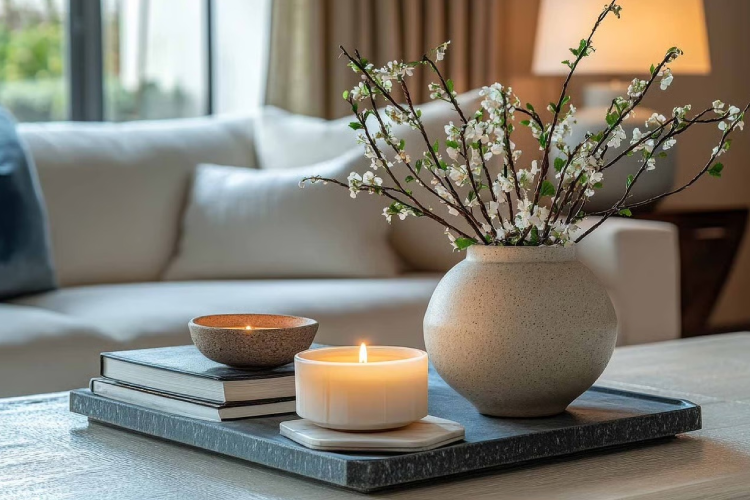
Restraint, primarily. Not in the “own very little” minimalist sense, but in the “each thing has room to be noticed” sense. A surface with three well-chosen objects on it reads as a design decision. The same surface with nine objects on it reads as a surface that gets used as a landing zone. The number of objects isn’t the issue — the breathing room between them is.
Proper scale is the second answer. Things that are sized for the space they’re in rather than things that look like they belong somewhere smaller. A correctly sized rug, properly sized art, curtains that touch the floor rather than stopping awkwardly mid-wall. None of these cost more money. They just require sizing up from whatever initially seemed like the right choice.
Idea 1 — Lighting
The bulb swap is so cheap and so effective that it deserves to be the first thing on every budget home decor list. Cool white and daylight bulbs make rooms feel like examination rooms in the evenings. Warm white 2700K makes them feel domestic and settled. The cost is $3 to $5 per bulb. Do every room tonight.
After the bulbs: identify which rooms are relying entirely on overhead lighting and add one lamp. Living rooms and bedrooms specifically. The overhead light should become the supplement, not the primary light source in the evenings. A $55 to $80 floor lamp in a living room corner or a $40 to $60 table lamp beside a bed changes the entire evening feeling of those rooms.
Idea 2 — Curtains
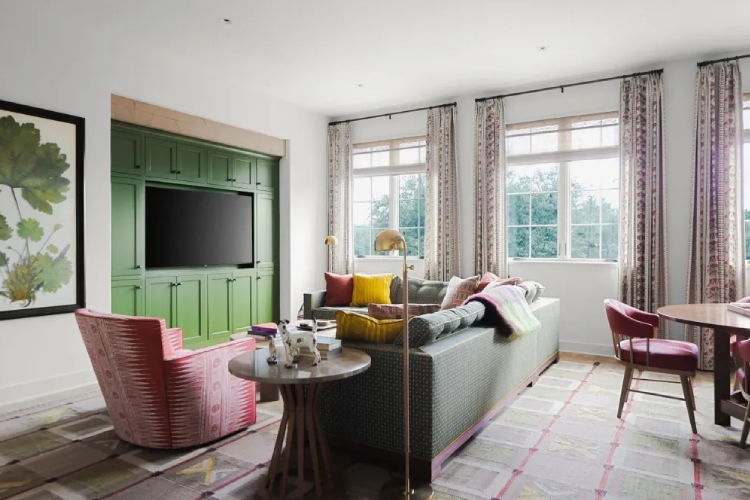
The specific technique: rod near the ceiling, extended past the window frame by 8 to 10 inches on each side, curtains reaching to the floor. This doesn’t cost anything extra if you’re buying curtains anyway. The same curtain that looks like an afterthought at window height looks like a real decorating choice at ceiling height.
IKEA HILLEBORG linen-look panels at $30 to $50 each, hung this way, are what I’d recommend for most rooms. They have enough body to drape properly, the linen texture reads as warm and considered, and the neutral oatmeal or cream tones sit well in rooms that already have earthy warm tones in the textiles.
Idea 3 — Bigger Rug
The rug under a sofa that’s too small is the fastest way to make a decorated room look unfinished. It doesn’t matter how much the rug cost or how nice the pattern is. If it’s the wrong size, the room looks wrong. This is the single most consistent decorating error in real homes, and the fix is straightforward: size up.
A jute or sisal rug in the right size — 5×8 for a smaller living room, 8×10 for a standard one — at $130 to $200 produces a room that looks anchored and complete. The natural fiber texture is currently very right for 2026 and it’s versatile enough to stay right beyond it.
Idea 4 — Better Cushion Covers
Two to three pillow covers in a consistent warm color palette on the main sofa. Linen, boucle, or a soft cotton weave. Terracotta, warm rust, dusty olive, warm cream. The covers from Amazon’s solid linen range at $8 to $14 each serve this function identically to $30 covers from premium home stores.
IKEA inserts at $6 each go inside. Never spend on inserts. The visual product is entirely the cover.
The improvement this makes: a sofa that looks like it’s been in the room for years with no particular intention suddenly looks like it was chosen and placed with some thought. The pillow covers are doing the work of saying “someone lives here and made some decisions.” That’s worth $24 to $42 for three covers.
Idea 5 — Wall Frames
One large piece on the biggest bare wall in your main room. Downloaded print file ($5), local print shop in large format ($20), IKEA RIBBA frame ($12). Total: $37. This solves the unfinished-wall problem that most homes have and does it at a cost that’s difficult to argue with.
The subject matter: botanical illustration, simple abstract in earthy tones, a black and white photograph of something that means something to you. Anything with some permanence to it rather than something trend-specific that will read as dated in 18 months.
Idea 6 — Baskets
The replacement of plastic storage with woven baskets is one of those quiet changes that adds up across a whole home. One large basket beside the sofa. One medium basket on a shelf or under a console table. One small basket on a dresser or in a bathroom. Each one: $8 to $35. Each one: adding natural texture to the room while solving an organizational problem.
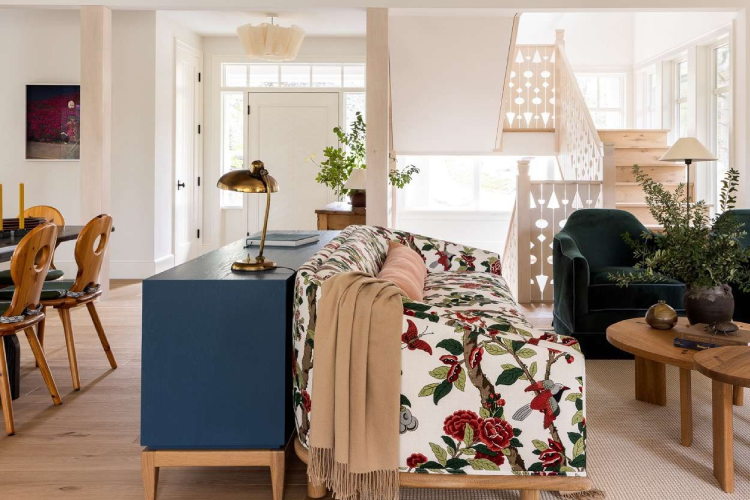
The cumulative effect is a home that has a consistent material thread — natural, woven, organic — running through it even when the individual items are inexpensive and functional.
Where to Spend
The rug. Floor lamp for living rooms and bedrooms. These are the two categories where quality has a visible and daily impact that justifies spending more than the minimum. Everything else on the list has legitimate budget options that produce the same visual result.
Where to Save
Pillow covers, wall art (using the download approach), decorative objects from thrift stores, candles from Target’s accessible range, baskets from IKEA and HomeGoods. These categories don’t reward premium spending in proportion to what premium costs.
Product Picks
Earthy linen pillow covers: Amazon $8 to $14 each. Scented candle warm woodsy: Target Threshold $8 to $14. Ceramic or terracotta vase: IKEA or thrift $5 to $15. Bamboo decorative tray for surface organization: Amazon $10 to $18. Jute area rug 5×7 or 5×8: Rugs USA or Wayfair $130 to $200. Wicker basket medium floor or shelf size: IKEA, HomeGoods, or TJ Maxx $12 to $35. Floor lamp warm shade: Brightech or similar $55 to $80. Large format botanical print with IKEA frame: $30 to $45 total. Linen-look curtain panels: IKEA HILLEBORG $30 to $50 each.
Final Thoughts
Six changes. Warm light, proper curtains, a rug that’s actually big enough, earthy pillow covers, one real piece of wall art, and baskets instead of plastic bins. These aren’t revolutionary ideas. They’re specific, practical applications of the principles that make rooms feel good — scale, warmth, material consistency, restrained surfaces. Done in order, with a real but modest budget, they produce a home that feels considered rather than just furnished. The distinction between those two things is entirely in the details, and the details are mostly free.