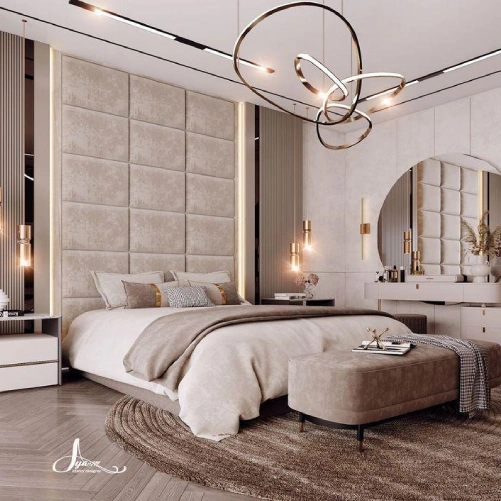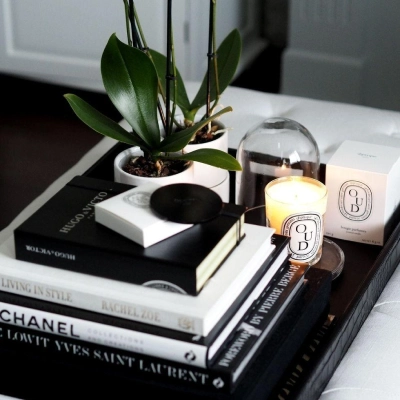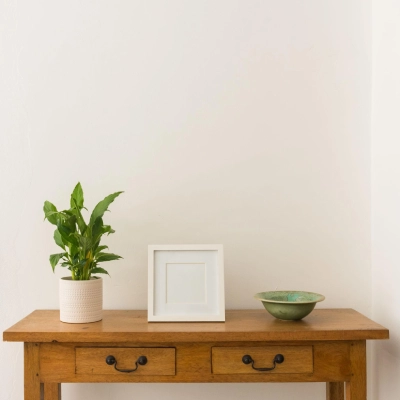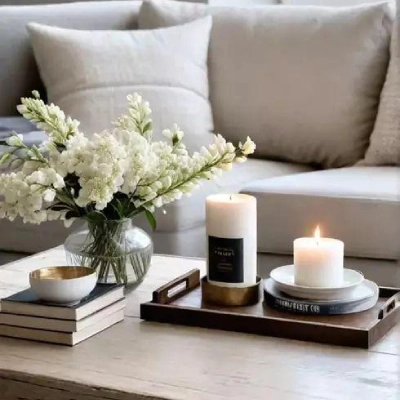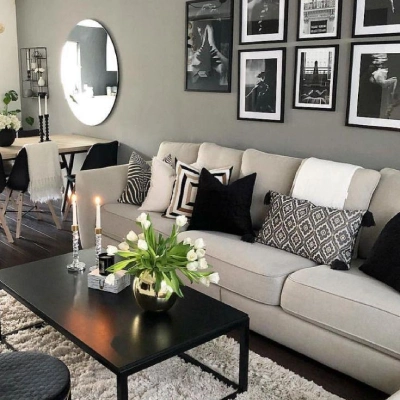

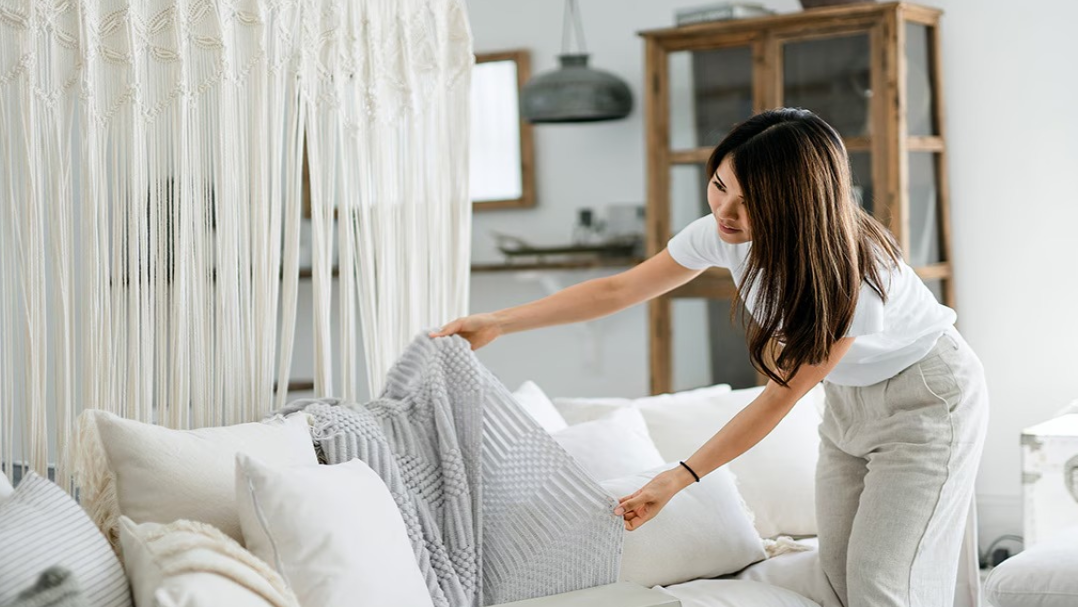
A decorator once told me something that changed how I think about rooms. She said the most expensive-looking homes she’d ever been in weren’t expensive. They were selective. The owners had bought very few things, but every thing they bought was in exactly the right place and exactly the right scale.
The least expensive-looking homes, by contrast, were often the ones with the most things in them. Objects that had accumulated over years without any particular intention. Surfaces covered with items that were individually fine but collectively incoherent. Rooms that were full but somehow still felt unfinished.
The lesson is the same one that comes up in every honest home decor conversation: the issue is almost never money. It’s attention. Specifically, attention to scale, to placement, to the relationship between things, and to the question of whether each object actually earns its place in the room or just occupies it.
This guide is about applying that attention practically, with affordable products and specific recommendations.
What Makes Decor Look Expensive
Here is the honest answer to this question, which is more useful than the usual “add some gold accents” advice: decor looks expensive when nothing in the room is fighting for attention and everything in the room feels like it was chosen.
The fighting-for-attention problem shows up in rooms with too many things, too many colors, or too many different styles competing simultaneously. The eye doesn’t know where to rest and the room feels busy and unsettled. The fix isn’t buying better things. It’s removing some of what’s there.
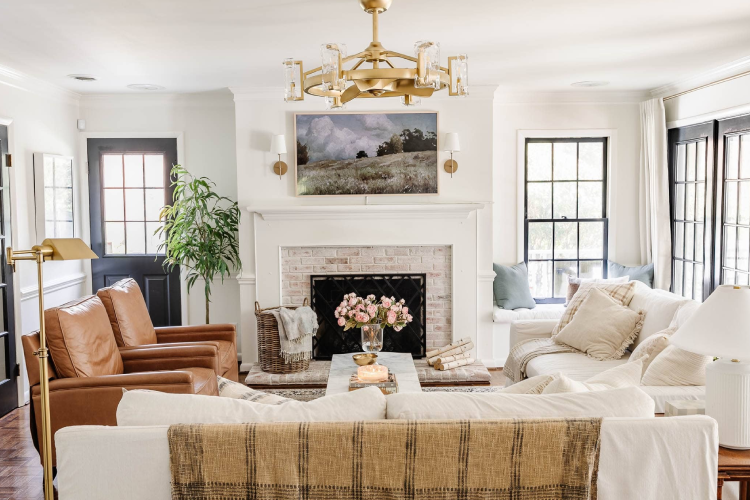
The chosen-feeling problem shows up when individual items are nice but don’t relate to each other — different color temperatures, different material families, different levels of visual weight. A linen pillow next to a very shiny metallic decorative object next to a rough wooden tray. Each piece might be quality. Together they produce a room that looks assembled rather than designed.
Both problems are solved by editing, by choosing a color temperature and sticking to it across the textiles, and by giving objects room to be seen. These are habits, not purchases.
Idea 1 — Lighting
Every room benefits from this: warm white 2700K bulbs in every fixture, and at least one lamp that isn’t the overhead ceiling light. This remains the first recommendation because it remains the change with the most immediate and dramatic impact on how a room feels, at the lowest possible cost.
A room that’s lit well in the evening — warm, layered, from multiple sources at different heights — looks more considered than the same room decorated twice as carefully but lit by a single overhead fixture in cool white. The lighting is doing the atmosphere work that all the other decor is trying to do.
For the floor lamp in a living room: a rattan-shade option at $60 to $80 from Amazon adds texture during the day and warm light in the evenings. Two functions from one purchase.
Idea 2 — Curtains
Ceiling-height curtains, width past the window, floor-length or just past it. The placement technique costs nothing extra and produces more visual improvement than upgrading from $35 panels to $80 panels would. Linen-look panels in a warm neutral, hung correctly, look like a real decorating decision rather than a functional addition.
The material matters to the extent that it drapes properly. Very thin, very cheap curtain panels don’t have enough weight to hang well. IKEA’s linen-look range at $30 to $50 per panel has enough body to hang properly without being heavy.
Idea 3 — Bigger Rug
The room looks designed when the rug is sized for the room. The room looks unfinished when it isn’t. This distinction is so consistently true that it’s worth stating clearly one more time: go larger than your instinct says. Measure the seating arrangement, not the floor. The rug should include the furniture, not sit independently in the center of the room.
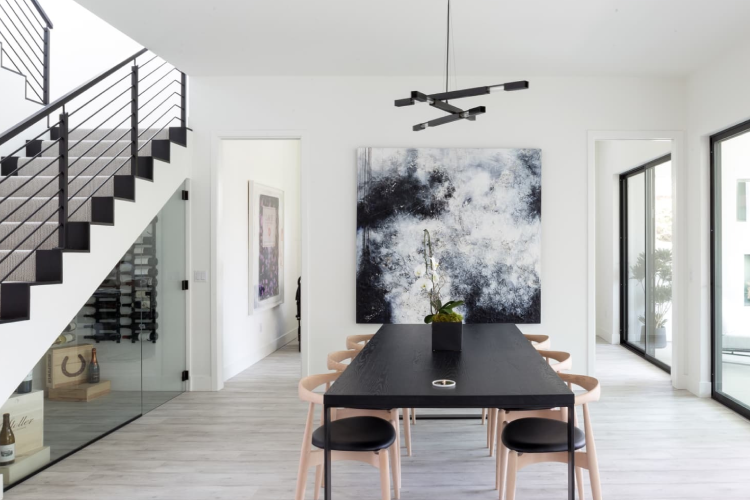
A plain jute rug in the correct size at $130 to $180 looks more designed than a beautiful patterned rug at the same price that’s 18 inches too small on every side.
Idea 4 — Better Cushion Covers
The pillow cover is what you see. The insert is what gives it shape. Spend on the covers, not the inserts. Two to three linen or boucle covers in earthy warm tones — the terracottas, the dusty olives, the warm creams that are most current in 2026 — on a neutral sofa make the room feel lived-in and considered simultaneously.
Budget covers at $8 to $14 each do this identically to premium covers at $30 to $40 each. This is the category with the smallest quality gap between budget and premium. Spend the savings on the rug.
Idea 5 — Wall Frames
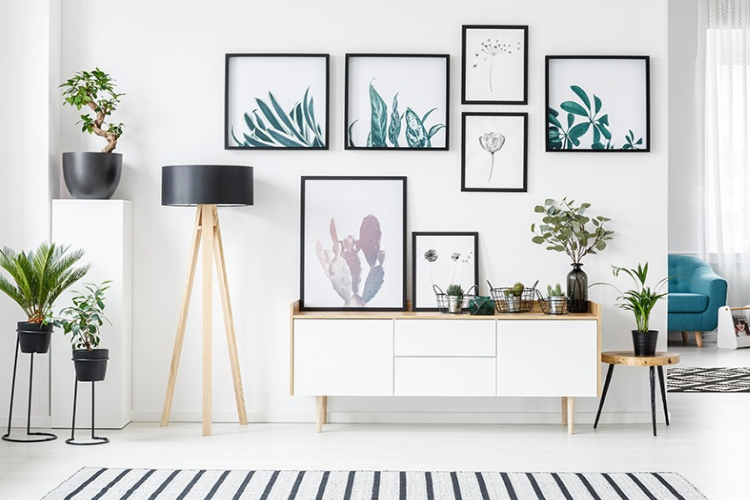
One large piece of wall art on the main blank wall of any room. Properly sized, properly hung — center at standing eye level. A $5 downloaded botanical illustration printed large at a local print shop for $20, framed in an IKEA RIBBA for $12, on a bare living room wall above a sofa, looks like a real considered art choice. Because it is one. The medium doesn’t determine whether it was chosen with intention. The choice does.
Idea 6 — Baskets
Natural woven texture from baskets distributed through a home — beside the sofa, on a shelf, in an entryway — creates a consistent material thread that makes individual rooms feel part of a coherent whole. A home with wicker and woven elements appearing in multiple rooms feels like it was decorated by someone who thought about it. A home where each room has entirely different materials in its small accents feels more random.
The cost: $8 to $35 per basket depending on size. The cumulative effect across a home: worth considerably more.
Where to Spend
The rug — always. The lamp that will be used every evening. These two purchases are made once and used daily for years. Their cost per use becomes very low very quickly, which is the best argument for spending slightly more on things you interact with every day.
Where to Save
Pillow covers, wall art using downloads and IKEA frames, candles for everyday fragrance, decorative objects from secondhand sources, baskets from accessible retailers rather than premium home stores. None of these categories produce a better visual result in proportion to what premium costs.
Product Picks
Linen pillow covers in warm earthy tones: Amazon $8 to $14 per cover. Scented candle in cedarwood or warm amber profile: Target Threshold Apothecary $8 to $14. Ceramic vase in neutral or terracotta: IKEA or thrift store $5 to $15. Decorative bamboo tray for surface organization: Amazon $10 to $18. Jute or textured area rug in correct size: Rugs USA or Wayfair $130 to $200. Wicker basket in medium or large: IKEA, HomeGoods, or TJ Maxx $12 to $35. Rattan-shade floor lamp: Amazon or Brightech $60 to $80. Large botanical or abstract print with IKEA RIBBA frame: $30 to $45 total. Linen-look curtain panels ceiling height: IKEA HILLEBORG $30 to $50 per panel.
Final Thoughts
Rooms that look expensive almost never got that way through expensive purchases. They got that way through consistent decisions about scale, color temperature, material consistency, and restraint. Those decisions are free. The products that support them are mostly affordable. The skill is in the attention — noticing what the room is missing, noticing what’s fighting for attention, noticing where scale is wrong — and making the specific adjustments that address those things.