
I have a friend who’s a nurse. She works twelve-hour shifts, spends most of them on her feet, and has tried probably eight different shoe brands in the past three years looking for something that doesn’t destroy her by the end of a shift.
She wears Skechers now. Specifically the Arch Fit. Has done for about eighteen months. Says she’d never heard of them before a colleague suggested them and now she tells everyone.
That story gets repeated in some form constantly in Skechers reviews. A person who wasn’t looking for Skechers, tried them reluctantly or on someone’s recommendation, and then became quietly evangelical about them. There’s something about actually wearing these shoes for a full day that closes the gap between “I’ve heard they’re comfortable” and “oh, I understand now.”
The challenge is that Skechers makes hundreds of different models and they’re not all the same. Buy the wrong one and you’ll be underwhelmed. Buy the right one and you’ll tell your friends too.
Here’s what’s actually worth buying in 2026, ranked by what your feet will feel like at the end of the day.
Quick Notes Before the Rankings
A few things that come up across verified buyer accounts and are worth knowing before you spend money.
Sizing runs slightly large on many styles. Multiple buyers across Zappos and Walmart specifically mention going a half size down from their normal size and getting a better fit. One buyer described this clearly: he’d have tried a half size smaller in-store but went with his usual size online and the shoes fit — just slightly bigger than he expected. Not a problem, but worth being aware of.
The Arch Fit insole is not compatible with custom orthotics. If you wear prescribed custom orthotics, the Arch Fit’s built-in contoured insole can tilt the foot incorrectly when combined. Look for models with flat removable insoles if orthotics are part of your setup.
Insoles compress over time. Most buyers notice this around the six-month mark with daily wear. Replacing the insole at that point with a quality aftermarket option — Superfeet or Powerstep — extends the useful comfort life of the shoe significantly.
Now the actual rankings.
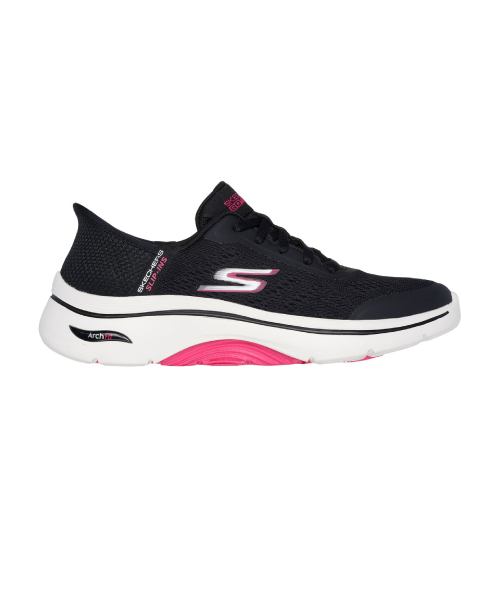
Price: ~$80–$100
If I’m being direct: this is the one most people should buy. It handles the widest range of everyday situations, has the strongest podiatrist credentials, and generates the most consistently enthusiastic long-term user reviews in the entire Skechers lineup.
The Arch Fit insole is what separates this from generic comfort shoes. It’s a contoured, podiatrist-designed system that distributes pressure across the foot more evenly than a flat foam insole. That might sound abstract until you’ve worn a shoe with it for eight hours and noticed that your feet don’t feel ground down the way they normally would. Multiple buyers describe this specifically — not “comfortable” in the vague generic sense, but “feet feel fine at the end of the day” in the specific, meaningful sense.
One Walmart buyer had been walking 8–12km daily during lockdown and developed plantar fasciitis. Within a week of switching to the Arch Fit, the pain was essentially gone. He described wearing them for over eight hours of standing and walking every day since. “So comfortable, feels almost as if I’m not wearing anything.” Another described the same PF experience and the same recovery. And another. This keeps coming up in the reviews with enough frequency that it’s clearly not coincidence — the arch support is doing what it’s supposed to do.
The 2.0 update added the Star Bound midsole cushioning underneath, which gives you shock absorption on top of the arch support rather than just one or the other. The leather upper version specifically is worth considering — easy to wipe clean, looks like a regular sneaker rather than a performance walking shoe, and goes with more outfits than the mesh versions.
The limitation: Runs narrow in standard width. Wide-width options are available across most colorways — check before ordering if your feet are on the broader side. Also: if you wear custom orthotics, this isn’t your shoe. The built-in arch contour and an orthotic together create problems rather than solving them.
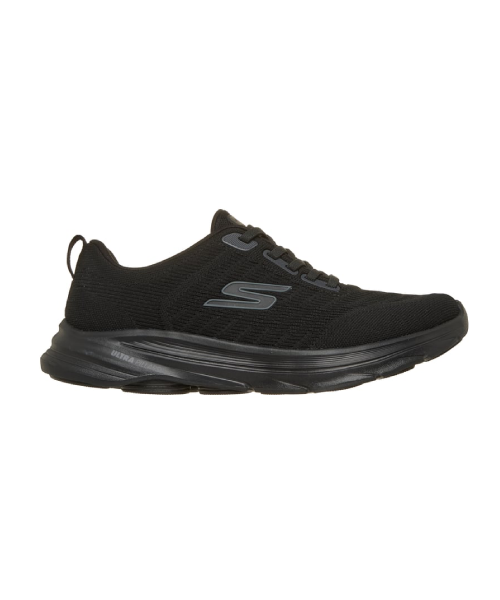
Price: ~$75–$90
If your everyday involves actual walking — not just moving between your desk and your car, but proper sustained walking — the Go Walk 8 is the shoe you want. It’s built for forward motion in a way the Arch Fit isn’t, and the difference is noticeable when you’re covering real distance.
The Goga Mat insole is the key. It’s not flat memory foam. It’s a high-rebound textured surface that pushes back against each step — which reduces fatigue over longer distances because your foot is getting some energy return rather than just sinking into foam that compresses and stays there. The Spring 2026 update introduced dual-density Hyper Pillar Technology in the midsole, which adds stability alongside that rebound.
Forefoot flexibility is what makes the Go Walk genuinely good for walking rather than just standing around in. Your foot bends through the toes with each step and the Go Walk’s sole allows that movement rather than resisting it. In a rigid shoe, that resistance accumulates as fatigue. Over a long walk, this matters.
One buyer described wearing these every day for errands and neighborhood walks. Another kept returning to the same model after trying alternatives — something about the Go Walk specifically that made other shoes feel like compromises. That pattern shows up repeatedly.
The limitation: This is an athletic-looking shoe. It doesn’t work in business casual or smart-casual contexts the way the Arch Fit 2.0’s leather version does. If you need one shoe to work across multiple dress codes, look elsewhere.
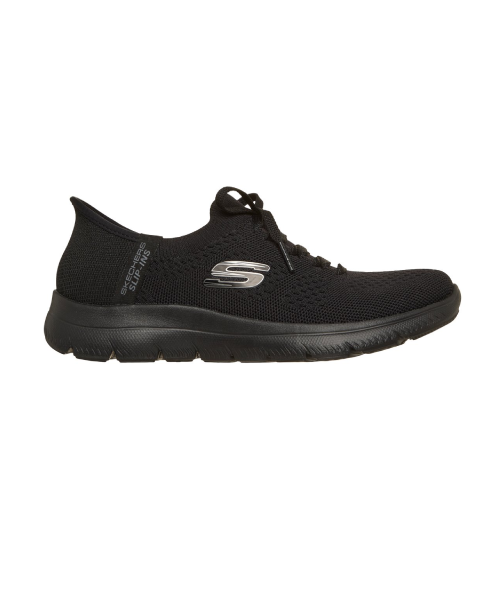
Price: ~$65–$80
The Summits are the most widely worn Skechers model and the Slip-ins version is why. The Hands Free entry — a Heel Pillow at the back that grips the heel while staying soft enough to step into without using your hands — is the feature that generates loyalty that comfort alone wouldn’t explain.
It sounds like a minor thing. Shoes that slip on without bending down. But for anyone who travels frequently, has any kind of mobility limitation, is always in a rush, or simply finds shoe-tying tedious at 7am — using these shoes daily changes the morning routine in a way you notice immediately and don’t want to give up.
The cushioning is solid but honest. Memory foam insoles, lightweight flexible construction, adequate all-day comfort for standard daily activity. This is not the shoe for twelve-hour walking days. For moving through a normal day — office, errands, travel, casual outings — it’s exactly right.
The limitation: Less cushioning than the Go Walk or Arch Fit lines. If foot fatigue on long days is your primary concern, this isn’t the right choice. If convenience is the priority, nothing in the lineup competes.
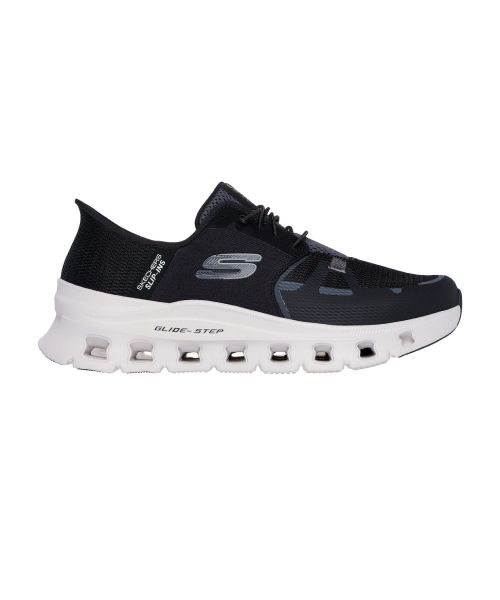
Price: ~$75–$95
Walking and standing are different problems. Most comfort shoe guides treat them as the same. They’re not.
When you walk, your foot moves forward and distributes load dynamically. When you stand for hours without significant movement — retail work, teaching, healthcare settings, standing desks — the load is static, it concentrates at the same pressure points, and standard walking shoe cushioning compresses and stays there.
The Glide Step Pro’s rockered sole design — the sole curves slightly upward at the front — takes pressure off the forefoot during extended standing. The denser midsole cushioning handles sustained static load better than the more reactive foam in the Go Walk line. Skechers designed this specifically for standing-intensive jobs and the buyer reviews from healthcare workers and retail staff specifically back that up.
The limitation: The rockered sole that makes standing comfortable creates a less natural feel during longer walks than the Go Walk’s more flexible design. These are purpose-built for different problems. Know which problem is yours.
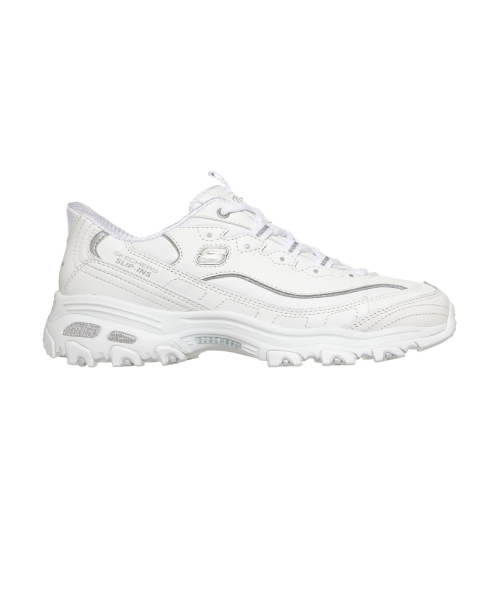
Price: ~$70–$90
Look. Sometimes you need to care about how the shoe looks as well as how it feels. That’s a legitimate requirement that most comfort shoe guides acknowledge awkwardly and then ignore.
The D’Lites chunky retro silhouette is genuinely fashionable in a way that no other shoe in this list is. The thick midsole that makes it look visually bold also provides real shock absorption. Memory foam cushioning throughout. Lightweight construction inside a shoe that looks heavier than it is.
Selected 2026 styles include Hands Free Slip-ins technology on the D’Lites silhouette — which combines the fashion-forward visual with the daily convenience factor that makes the Summits so popular. That combination doesn’t exist at this price point from many other brands.
The limitation: The chunky platform aesthetic is a specific look that not everyone wants. If low-profile is important to you, none of the D’Lites will satisfy.
Which One Should You Actually Buy
One honest question narrows it down fast: what is your actual daily situation?
You walk a lot — properly, not just moving around the office: Go Walk 8. The Goga Mat and flexible forefoot were built for walking distance and nothing in the lineup does it better.
Your feet hurt by the end of most days and you’re not sure why: Arch Fit 2.0. Start here. The podiatrist certification and the pattern of foot-pain-resolved reviews are specific enough to be reliable.
You stand more than you walk — retail, healthcare, teaching: Glide Step Pro. Different shoe for a different problem.
You want maximum ease of use and convenience: Slip-ins Summits. If tying laces is a daily friction point, you’ll notice the absence of it immediately.
You need the shoe to look good as well as feel good: D’Lites. It’s the one that crosses over.
What Real Buyers Actually Say
One buyer at 70 years old was walking more than four miles a day. Liked his first pair of Arch Fit 2.0 so much he bought a second pair and said at the time of writing he was going back to buy more. “Best walking shoes I have worn.”
A shipping warehouse worker wore the Go Walk Arch Fit for eight to twelve hour days on his feet. Described the arch support as good but not too much — the shoe “breathable and cool” even in hot weather. One sole liner started peeling in the first month which he flagged as disappointing — probably a glue defect on that specific pair rather than a systemic issue, but worth knowing.
A buyer with seriously fallen arches described the Arch Fit sandal as one of the few shoes she could actually walk in. She wears the Arch Fit work shoe daily and described her feet adapting quickly even between different versions of the Arch Fit system.
A buyer who was genuinely skeptical wrote “in all honesty, these are the most deliciously comfortable sneakers I’ve ever worn. I’m serious.” She came back to the review page because she was considering a second pair.
One consistent note: a handful of buyers describe the arch support feeling wearing out around the six-month mark with daily use, particularly after washing. This matches what’s known about foam compression over time. Replacing the insole at that point extends the shoe’s useful life rather than replacing the whole shoe.
Where to Buy
Zappos is the most recommended purchase channel across the Skechers buyer community. The reviews on individual styles are detailed and verified — specific sizing notes, fit descriptions, long-term durability comments. Free returns and reliable delivery make it the lowest-risk online option for a first Skechers purchase.
Skechers direct at skechers.com has the full range and all width options. If you need a specific width — regular, wide, extra-wide — the direct site has the most complete stock.
In-store at Skechers retail, Foot Locker, DSW, or department stores is worth doing for a first purchase. Walking around the store in the specific model tells you things that even the best online reviews can’t.