


I’ve bought furniture from both. I’ve assembled furniture from both at 11pm on a Sunday when the instructions made no sense and the hardware bag had three mystery screws left over. I’ve had great experiences with both and I’ve had the specific kind of disappointment that only happens when something arrives looking nothing like the photo you ordered it from.
Here’s the thing nobody says clearly enough about the Wayfair vs IKEA debate: these aren’t the same type of retailer competing for the same buyer. Understanding what each one actually is changes how you shop both of them — and stops you from being frustrated when one of them doesn’t give you what the other one would have.
This is the honest breakdown. Category by category, with a clear answer on where to spend your money.
What You're Actually Dealing With
IKEA designs and manufactures its own products. Every piece in the store or on ikea.com came from IKEA’s own design and supply chain. That vertical integration is why the quality within a category is predictable — you know roughly what you’re getting before it arrives. It’s also why the aesthetic is consistent and why every IKEA store in every country feels like the same store.
Wayfair makes nothing. It’s a marketplace — an extremely large, well-designed platform that connects buyers with thousands of third-party suppliers and manufacturers from around the world. When you buy a “Wayfair sofa” you’re actually buying from whichever manufacturer listed it there. That’s why quality varies so dramatically between listings and why two items that look similar can have completely different outcomes.
Neither model is better in the abstract. But knowing which you’re dealing with changes how you evaluate both.
Price — Who Wins?
For storage furniture, IKEA wins. Nothing touches the KALLAX at $89.99 for a four-cube unit, the BILLY bookcase at under $100, or the PAX wardrobe system at prices that wouldn’t cover a single shelf from most furniture retailers. At the budget tier, IKEA’s pricing is the benchmark everything else gets compared against.
For mid-range furniture — sofas in the $300–$700 range, accent chairs, dining tables, bed frames — Wayfair is genuinely competitive and sometimes cheaper than IKEA for comparable quality. The difference is that “comparable quality” on Wayfair requires research. You need to read the specs and the customer reviews. On IKEA you know what you’re buying before you buy it.
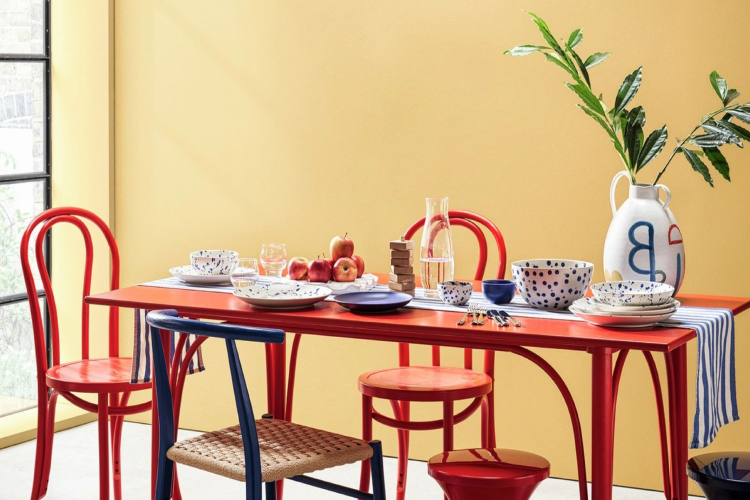
Wayfair’s flash sales and Way Day events — their annual sale held twice yearly in spring and fall — bring mid-range furniture down 40–70%. During those windows, the value is genuinely hard to beat anywhere. IKEA doesn’t really do comparable sale events; their pricing is relatively static year-round.
Winner by category: IKEA for budget basics, Wayfair during sales for mid-range furniture.
Quality — The Honest Conversation
Both have quality variation. Neither is uniformly excellent or uniformly bad. The difference is where the variation lives.
IKEA’s quality variation is between product lines. A KALLAX shelf is built to a different standard than a LACK side table, which is built differently than a KIVIK sofa. Once you know which tier you’re shopping, the quality is consistent within it. The KIVIK and FINNALA sofas use kiln-dried hardwood or layered birch plywood in structural areas. The BILLY bookcase has been in production since 1979 and uses engineered wood that’s been refined through decades of mass production. None of it is heirloom furniture. Some of it, like the storage range, genuinely outperforms its price.
Wayfair’s quality variation is between listings at the same price point. Two $400 sofas listed side-by-side can have completely different construction, materials, and longevity depending on which supplier made them. One might have a solid wood frame with high-density foam. The other might be particleboard and low-density polyester that compresses within a year. The photos can look nearly identical.
This is why the advice for Wayfair is always the same: read the materials spec before buying furniture, not just the description. Check the customer review photos, not just the hero images. Look for the words “solid wood” versus “engineered wood” or “MDF” in the specs. The information is there — it requires more effort to find than IKEA’s upfront labelling.
For sofas specifically: IKEA’s sofas are acceptable for short-to-medium term use in households without heavy daily traffic. They’re not the choice for a family room that needs to last ten years. Wayfair’s mid-range sofas from established in-house brand labels — Sand & Stable, AllModern, Birch Lane — consistently outperform IKEA in comfort and materials at comparable prices. But from anonymous budget listings, the outcome is less predictable.
Winner by category: IKEA for predictability, Wayfair for mid-range upholstered furniture when you’ve researched the specific listing.
Selection and Style — Not Even Close
Wayfair wins this one without a contest.
IKEA has a specific aesthetic — Scandinavian-influenced, clean lines, functional minimalism. It’s a good aesthetic. It’s also the only one they offer. If your home leans farmhouse, coastal, mid-century modern, maximalist, Art Deco, or anything else, you’re working against the grain of what IKEA naturally produces. People have learned to adapt and mix, but you’re adapting to IKEA’s vision rather than the other way around.
Wayfair has 18 million products across every conceivable style, colour, material, and room type. The filtering system is genuinely exceptional — you can narrow by aesthetic, material, dimensions, price, and colour simultaneously and get meaningful results. If you have a specific vision for a room and want to find pieces that fit it exactly, Wayfair is the more useful shopping experience by a significant margin.
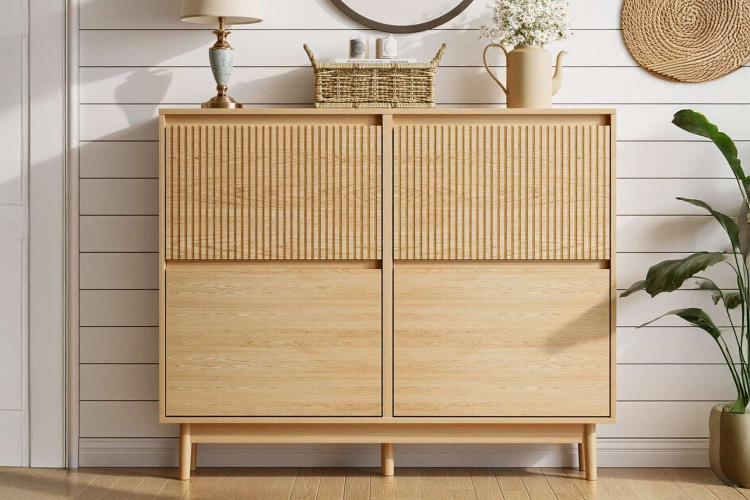
The flip side: Wayfair’s breadth can be paralysing. Too many options makes decision-making harder, not easier. Using the style filters from the start — committing to an aesthetic before you browse — makes the experience dramatically more manageable.
Winner: Wayfair, easily.
Assembly — The Sunday Evening Reality
Both require assembly for most products. Neither makes this uniformly pleasant. The differences are real though.
IKEA assembly is predictable. The wordless diagram instructions are either a stroke of accessibility genius or an exercise in spatial reasoning depending on your brain, but they’re consistent. You know what you’re getting into when you buy a PAX wardrobe versus a KALLAX shelf. The cam locks and dowels work as designed. The hardware is standardised enough that a missing piece is easily replaced at any IKEA store.
Wayfair assembly varies by manufacturer. Some listings come with clear, step-by-step illustrated instructions that take thirty minutes. Others have instructions that appear to have been translated from another language by someone who hadn’t assembled the product themselves. Steps get skipped. Hardware gets mislabelled. One consistent buyer complaint across Wayfair reviews is assembly instructions that don’t match the physical components.
IKEA also wins on replacement parts. They stock hardware for most products, sometimes years after purchase. If a cam lock strips during assembly or goes missing in a move, you can order a replacement directly. For Wayfair furniture from third-party manufacturers, replacement hardware is rarely available — when something breaks, you’re usually buying a new piece.
Winner: IKEA for assembly consistency and long-term part availability.
Delivery — A Tale of Two Experiences
Wayfair’s delivery is one of its strongest competitive advantages. Free shipping on most orders over $35 — including large furniture — is genuinely unusual in this category. Most furniture retailers charge $50–$150 to deliver a sofa. Wayfair doesn’t. Standard items arrive in three to seven business days. Large furniture in one to two weeks.
IKEA’s delivery situation is more complicated. In-store collection is the intended experience — you pull your own flat packs from the warehouse section and load them in the car. Online delivery is available but has generated consistent complaints: damaged items, missed windows, customer service that’s hard to reach. If you live near an IKEA and can collect yourself, the experience is smooth. Relying on IKEA’s online delivery for large furniture is noticeably less reliable than Wayfair’s.
Winner: Wayfair for delivery convenience and reliability.
Returns — Read the Fine Print
Wayfair offers a 30-day return window on most items. Small items use standard carrier returns. Large furniture returns go through freight coordination which adds some complexity, but the process generally works.
IKEA’s in-store returns are easy — bring it back within 365 days with a receipt and they take it. Online order returns are less straightforward and involve more steps than walking something back into the store.
Winner: IKEA for hassle-free in-store returns, Wayfair for online purchase returns.
Category-by-Category Verdict
Category | Winner | Why |
Storage and shelving | IKEA | KALLAX, BILLY, PAX are genuinely unmatched at the price |
Sofas and upholstered furniture | Wayfair (with research) | Better mid-range options at comparable prices |
Home office furniture | IKEA | ALEX drawers, LINNMON desks — reliable, functional |
Rugs and decor | Wayfair | Far more variety, competitive pricing |
Bed frames | Both | IKEA for budget/functional, Wayfair for style variety |
Dining furniture | Wayfair | More style options; comparable quality when researched |
Style variety | Wayfair | No contest — 18M products vs one aesthetic |
Assembly consistency | IKEA | Predictable every time |
Free delivery | Wayfair | Included on most orders, including large furniture |
Long-term part availability | IKEA | Replacement hardware available for years |
Budget basics | IKEA | Nothing matches the KALLAX or BILLY at their prices |
Customer service | Wayfair | More accessible and responsive than IKEA online |
The Smart Approach — Use Both
Here’s the thing most Wayfair vs IKEA articles won’t say directly: the right answer for most households is to use both, strategically, for what each does well.
IKEA for storage. The KALLAX, BILLY, PAX, and ALEX categories are where the value is extraordinary and consistent. If you need to organize a home office, a bedroom, a children’s room, or a living room — IKEA’s storage systems are the most cost-effective well-designed solution available at any consumer price point.
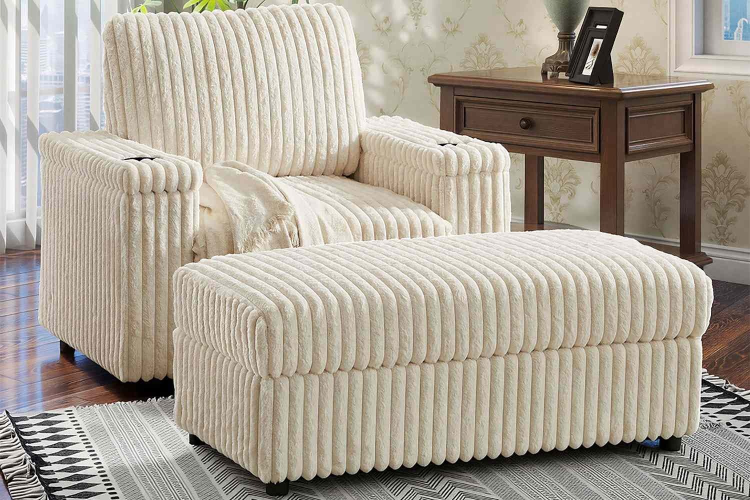
Wayfair for mid-range furniture, rugs, and style-specific pieces. When you need a sofa that fits a specific aesthetic, a rug in a particular colour and material, or accent furniture that doesn’t look like it came from the same flat-pack factory as everyone else’s living room — Wayfair’s selection and filtering tools deliver in a way IKEA can’t.
The only rule that matters when shopping Wayfair: do your research on the specific listing before buying furniture. Check the materials spec. Read the customer review photos. Stick to mid-range price points and established brand labels for anything you plan to use daily. Skip the hero photography and trust the buyer-submitted photos instead.
Done that way — IKEA for what it’s genuinely great at, Wayfair for what it’s genuinely great at — you get better outcomes than you’d get from committing to either one exclusively.
Final Answer
Buy from IKEA if: You need storage, shelving, home office furniture, or flat-pack basics at the lowest reliable price. You live near a store and can collect yourself. You want predictable quality and easy part replacement.
Buy from Wayfair if: You want style variety beyond Scandinavian minimalism. You need free delivery on furniture without driving anywhere. You’re furnishing a room with a specific aesthetic in mind and need the filtering tools to find it. And you’re willing to do five minutes of research on the specific listing before buying.
Buy from neither and consider a specialist if you’re buying a sofa for a family room that needs to last a decade, or anything where heirloom quality matters. Article, West Elm, and Arhaus are all worth looking at in that scenario — none of the three are cheap, but furniture you replace every three years costs more over time than furniture that lasts ten.