
There’s a specific kind of frustration that comes from trying to find honest budget home decor advice and getting content that uses “budget” as a word that means something like $600 per room. The “budget refresh” that requires a $200 rug, a $150 lamp, and a $120 set of decorative objects. That math doesn’t match most people’s real situation and it doesn’t match what I mean by budget.
What I mean is: limited, real money, spent on things that make a visible and lasting difference, in an order that makes sense. Not a fantasy version of budget decorating but the actual version — where you pick the things with the highest impact per dollar and let the rest wait.
Good news first: home decor is one of the areas where the relationship between money spent and quality of result is less linear than most categories. You can have genuinely good-looking rooms on a real constraint if you understand what actually does the visual and atmospheric work and what just fills space.
Why Home Decor Spending So Often Feels Wasted
The pattern that produces unsatisfying results despite real spending: buying many small things that don’t individually add much and don’t collectively add up to anything either. Ten $10 items is $100 and a room full of clutter. One $100 item that anchors the room is $100 and a room that feels considered. The number is the same. The experience is very different.
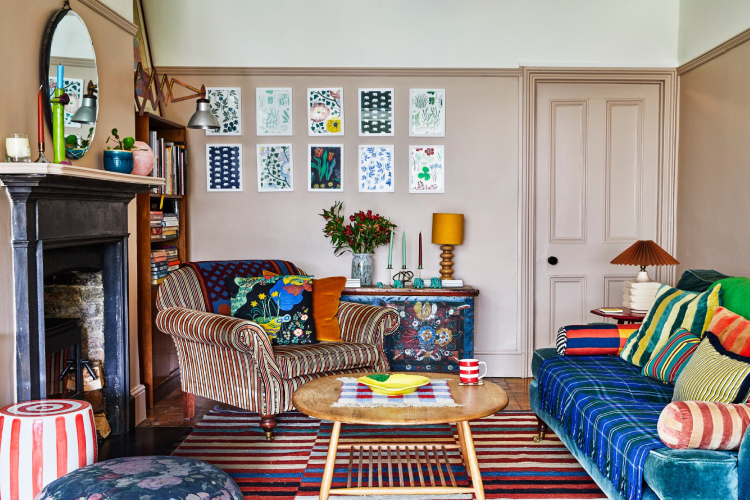
The other pattern: buying trend-driven pieces that have a short useful life. Something bought because it was everywhere on social media last season is a purchase that starts dating immediately. The money spent on it would have served better on something that sits outside the trend cycle — a good rug, a lamp that will work in any room, a neutral textile.
Budget decorating works when you’re selective about where money actually changes the result, and honest about where it doesn’t.
Where Budget Works Fine
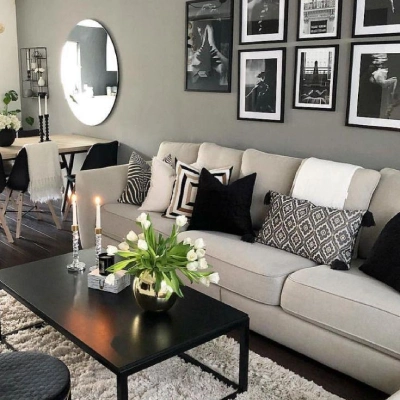
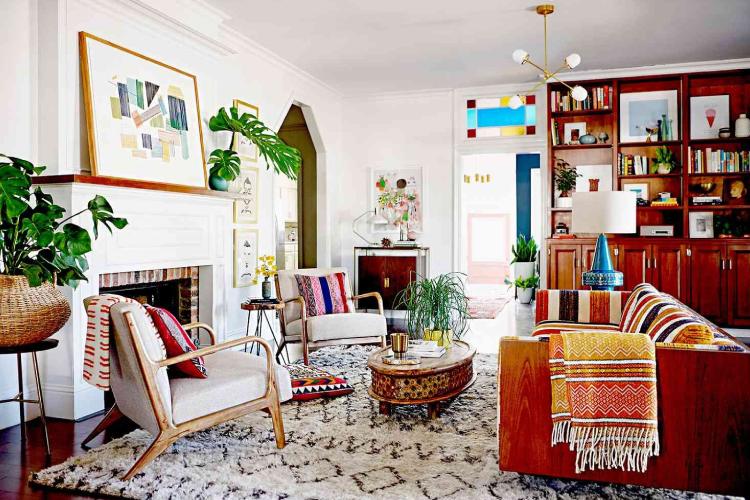
Throw pillow covers are the category where spending very little produces the same visual result as spending three times as much. An $8 to $14 linen cover from Amazon does the same visual job as a $35 cover from a premium home store. The texture, the color, the warmth it adds to a sofa — these things are present at both price points. Buy budget covers, cheap inserts, and spend the saved money on the rug.
Wall art is almost entirely solved by the downloadable print approach for anyone willing to make one trip to a print shop. A $5 digital art file printed large at a local printer for $20 and framed in an IKEA RIBBA for $12 produces something that looks like a real considered art purchase. Total spend: under $40 for something that would cost $80 to $150 as a finished print from a retail source.
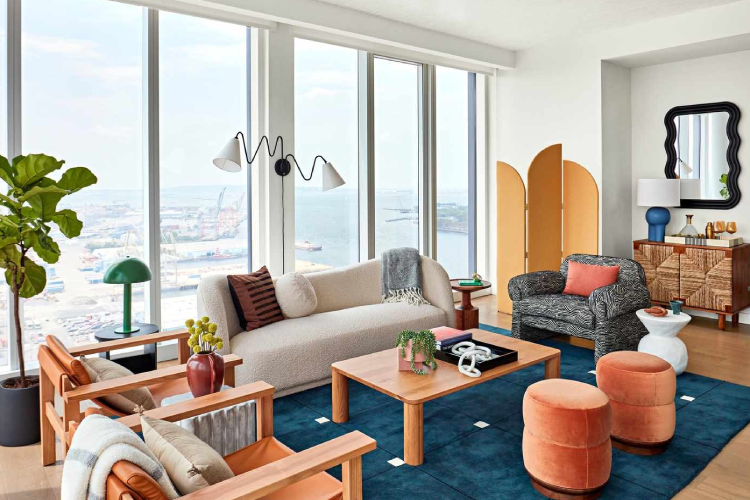
Small decorative accents — ceramic vases, baskets, smaller decorative pieces — are the category where thrift stores and secondhand markets consistently deliver. A ceramic vase that would be $35 new from a home store turns up at Goodwill for $3 with some regularity. Wicker baskets, picture frames that can be spray-painted, interesting bowls, small lamps — all of these are secondhand market staples. Check there before buying new.
Where Budget Hurts
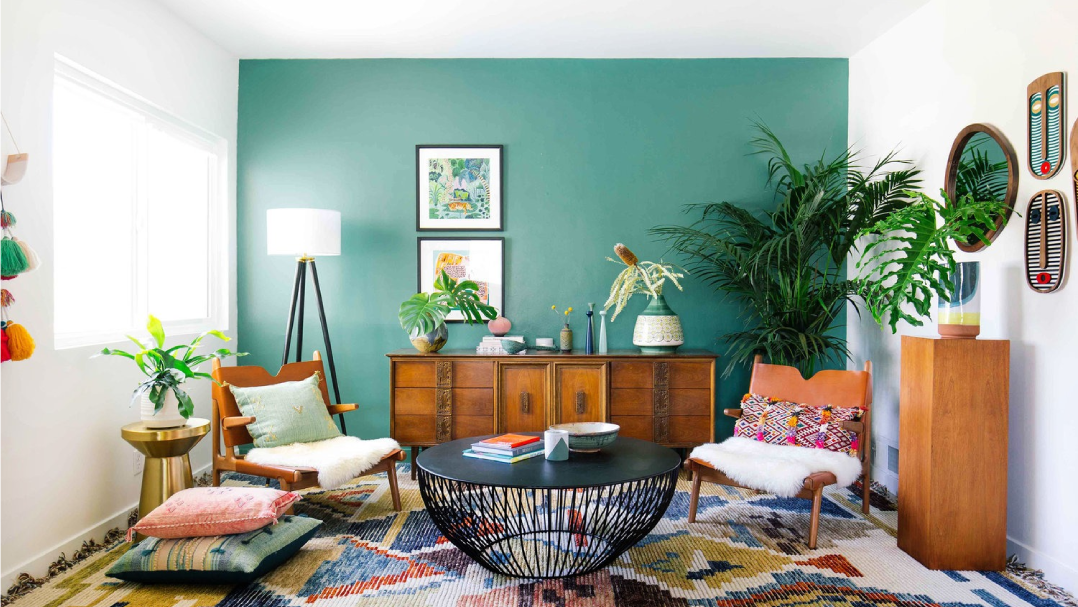
The rug is the main exception to budget being fine. A rug under $80 for a space that will see daily foot traffic will show its price within months. The pile flattens, the colors fade, and the fabric continues to shed long after it should have stopped. More than anywhere else in home decor, the rug is where spending slightly more than you want to is the decision that pays off over time.
Lighting is the second category where cheap tends to show. A $15 floor lamp from a discount source has visible quality issues — the shade material is thin, the proportions are off, the base feels unstable. A $60 to $80 lamp looks like a considered purchase. The range from $40 to $80 in floor lamps is where the visible quality difference per dollar is steepest.
High-Impact Low-Cost Changes That Cost Nothing
Rearranging existing furniture is the most underused budget decorating move. Most rooms have one obvious furniture configuration and several that work better. Push the sofa away from the wall — floating furniture in a room rather than pressing it against every wall makes the space feel larger and more considered. Move a chair from one corner to another. Change where the rug sits relative to the seating. These are free changes that sometimes produce better results than $200 of new purchases placed in the same old arrangement.
Swap the light bulbs to 2700K warm white throughout. A room where all the bulbs are warm-toned feels categorically different in the evening from a room with cool white or daylight bulbs. This costs $3 to $5 per fixture and the difference is immediately visible. It’s one of those changes that seems too small to matter until you make it.
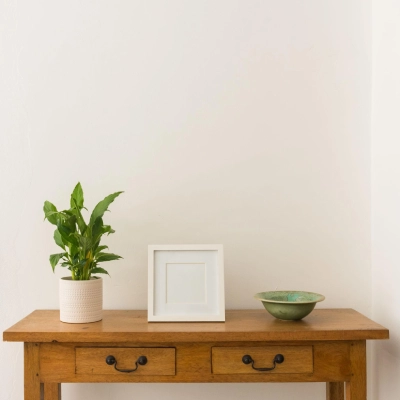
Clear the surfaces before adding anything. A dresser covered in accumulated objects, a console table that serves as a landing zone for everything, a bookshelf that holds things by default rather than by choice — these read as clutter regardless of the quality of the individual items. Removing two-thirds of what’s on any given surface and cleaning the surface first almost always looks better than adding anything new to the existing situation.
Products That Deliver at Low Cost
For throw pillow covers in the $8 to $14 range, the Amazon linen options in solid earthy tones — warm rust, olive, cream, terracotta — are the specific recommendation. Neutral and earthy tones read well and age better than trend-specific color combinations. For IKEA frames in the RIBBA series at $8 to $20 depending on size: these are the budget wall art infrastructure that makes the downloadable print approach work at scale. For storage baskets from the IKEA range or thrift stores at $5 to $20: woven texture adds something to a room while solving an organizational problem, which makes them one of the better value additions at any price point. For ceramic pots for plants at $8 to $20: the pot is what makes a plant purchase read as a decor decision. The plant itself can come from a grocery store for $8. The pot is where you spend the $12.
What Not to Buy on a Budget
The fast-fashion end of the home decor market — the very cheap, heavily trend-driven items from discount online retailers that arrive in unmarked packaging and look acceptable in product photos — is the category with the worst value for money when averaged over actual useful life. These items look like what they cost in person. They deteriorate quickly. They don’t improve with use.
Novelty decor with a narrow aesthetic range is similarly poor value on a limited budget. Something that only works in one specific aesthetic context has a shorter useful life than something simpler and more versatile. Save premium spending for the versatile, the timeless, and the things made of materials that age well.
Final Thoughts
Budget decorating works when you’re honest about two things: where quality of material and quality of manufacture produce a visibly better result, and where they don’t. The rug and the lamp are where spending more than you want to is justified. The throw pillow covers and the wall art are where budget solutions produce identical visual results. Understanding that distinction is most of the skill in getting a good-looking room without a large budget. The rest is patience, selectivity, and a willingness to return things that don’t work.