

There’s a specific type of brand that builds its identity around being better. Not just better clothes — better values. More honest. More ethical. More transparent. A brand you can feel good about buying from.
Everlane built that identity deliberately and successfully for the better part of a decade. “Radical Transparency” wasn’t just a marketing phrase — it was trademarked. They published the cost breakdown of every garment. They showed you the factories. They told you the markup. Urban millennials who wanted ethical consumption with clean aesthetics made Everlane the brand that proved you could care about both.
Then a lot happened. And now, as of June 2026, something has happened that changes the conversation entirely.
Here’s the complete honest picture.
What Everlane Was Built On
Michael Preysman founded Everlane in San Francisco in 2010 with a genuinely interesting premise. He’d noticed that most people had no idea why a t-shirt could cost $10 or $100 — the fashion industry’s opacity was total. His answer was to start with a basic t-shirt and do it “in the most honest way possible” — publishing the cost of materials, labor, transport, and duties alongside the retail price.
Within three months of launch they were providing pricing transparency. Factory transparency followed in 2013, directly after the Rana Plaza garment factory collapse in Bangladesh killed over 1,100 workers and shook the fashion industry’s conscience briefly into view. Everlane went further than most — they shared photos of their partner factories, compliance information, stories about the workers. They committed to eliminating all virgin plastics from their supply chain by 2021.
By 2016 the brand was valued at $250 million. By 2025, projected revenues were approaching $550 million. The waitlist model for new product launches created genuine cultural demand. The clothes looked clean and modern and not trying too hard, which was exactly the aesthetic moment they’d positioned themselves for.
That’s the origin story. It gets more complicated from here.
The Quality: What You Actually Get
First, the product — because for a lot of buyers this is still the primary question regardless of the brand narrative.
Everlane’s core categories are genuinely well-made. The cashmere and alpaca knitwear is a consistent standout across independent reviews. One Thingtesting reviewer described owning a turtleneck in five colors and rotating through them all winter — ribbed fabric, soft, showing little wear after years of use. Another described her alpaca sweater in almond as one of the best pieces in her wardrobe.
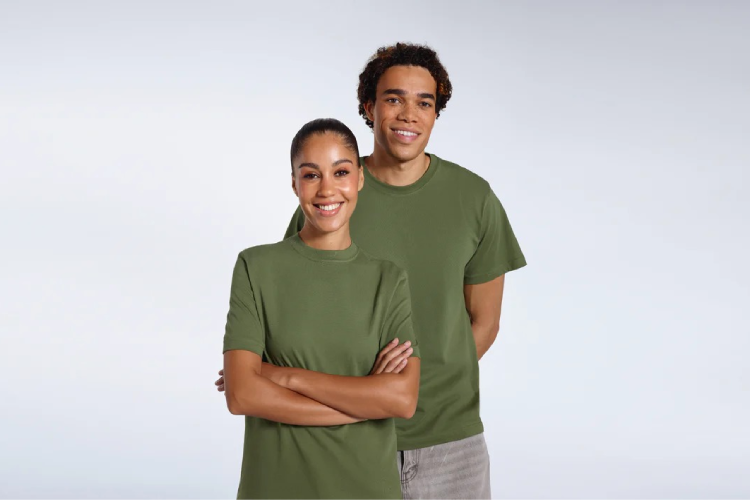
The cotton basics — t-shirts, simple crew necks — test favorably against comparable pieces from Uniqlo and Gap. The fabric quality on the t-shirts demonstrates meaningfully better durability over time than both in independent side-by-side comparisons. They hold their shape, they don’t pill aggressively, and the colors don’t wash out as quickly as mass-market alternatives.
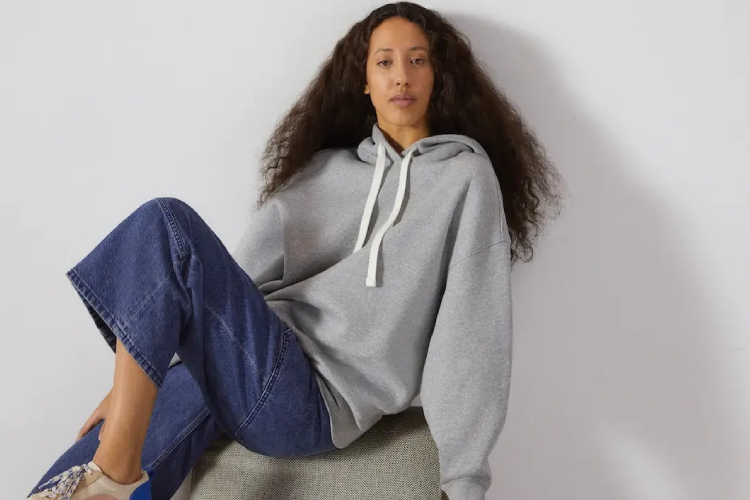
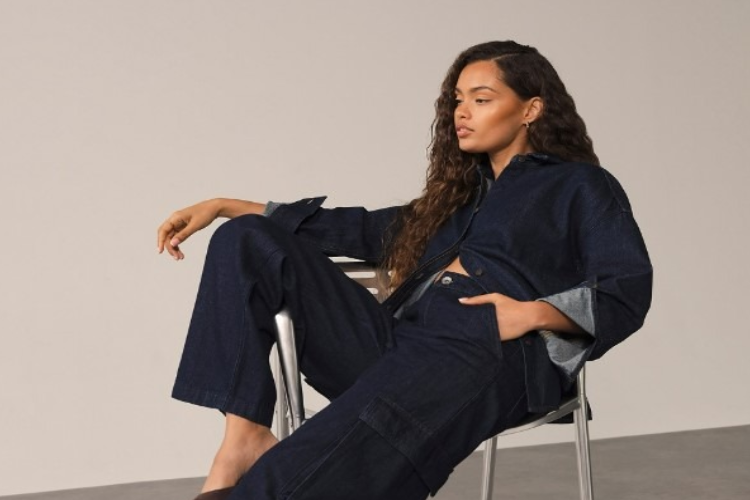
The denim has a loyal following. Reviewers describe Everlane jeans as among the best-fitting they own at the price point — the barrel pant specifically is mentioned repeatedly as an “iconic staple piece” that holds up through repeated wearing and washing.
The tricky categories are the items where quality is less predictable. Some reviewers have received pieces in excellent condition — “exactly as described, well cut, in a nice thick fabric.” Others describe sizing inconsistency, particularly for petite frames where even the standard sizes can run oversized. The brand has expanded its size range but several buyers still flag that the sizing still isn’t inclusive enough across their full range.
The honest picture: Everlane’s quality on their core strengths — knitwear, denim, cotton basics — is real and justifies the price. They’re not luxury quality. They’re a genuine step above fast fashion and H&M, with construction and material standards that hold up over time in ways that cheaper alternatives don’t. Whether they hold up over what you paid relative to competitors like Uniqlo (which is cheaper and has similarly strong quality on basics) depends on the specific item.
The Ethics Claims: What Happened
This is the more complicated story, and in 2026 it requires a full account.
Everlane built its ethics positioning around “radical transparency” — a trademark, not just a phrase. But the transparency had limits that external scrutiny gradually made clear. Watchdogs accused the brand of greenwashing — being less than forthcoming about supply chain details and the specific sources of raw materials. The 2021 pledge to eliminate all virgin plastics from the supply chain quietly disappeared without accountability when the deadline passed.
Then in March 2020, something harder to explain away happened. Everlane laid off 42 of its 57-person customer experience team and 180 part-time retail employees. Those employees had been actively organizing to form a union since December 2019, citing concerns about insufficient wages and unpredictable scheduling. Workers had been reassured the company was “stronger than ever” shortly before the announcement. The firings came without advance notice — staff logged into their accounts and found them locked.
Bernie Sanders called it union busting on Twitter. So did labor experts and advocates. Everlane’s founder said the decision was about financial losses, not the union. Workers pushed back — internal emails had shown online sales up 32% during the pandemic period. The National Labor Relations Board reviewed the case. The union, in their own words, said “Everlane concocted a narrative that they had been planning to reduce our workforce for months.”
Former employees followed with allegations of systemic racism and a toxic internal culture — claims that directly contradicted the “100% Human” language the brand had been using in its marketing.
In 2020 Everlane took a significant investment from L Catterton, a private equity firm backed by Groupe Arnault and LVMH — the conglomerate behind Louis Vuitton and Dior. A brand built on transparency and ethical production, funded by capital tied to the most opaque and extractive end of the fashion industry. Private equity doesn’t invest in restraint. It invests in returns.
What followed was mounting debt — $90 million by 2025 — layoffs, rebranding, and declining sales as the work-from-home era reduced demand for the office-adjacent minimalist aesthetic the brand had cornered.
The Shein Acquisition — June 2026
On June 4, 2026 — the day before this article was written — the San Francisco Standard broke the story that Everlane had been acquired by Shein.
Let that sentence sit for a moment.
Shein is the ultra-fast fashion platform that has faced sustained international scrutiny over labor practices, environmental impact, intellectual property theft allegations, and the production conditions of its factories. Everlane built its entire identity as the antithesis of that model — radical transparency versus radical opacity, ethical production versus the fastest and cheapest possible production.
The acquisition is one of the more striking brand contradictions in recent fashion history. A company that trademarked the phrase “Radical Transparency” is now owned by a company that has consistently resisted disclosure about its supply chain.
What this means for the actual products — whether manufacturing standards will change, whether the factory transparency will survive, whether the brand will continue to exist as a distinct label or be quietly absorbed — is not yet clear. The acquisition was announced days ago and the operational details are not yet public.
What is clear is that the ethics positioning Everlane built its identity around cannot be evaluated the same way it was a week ago.
What Customers Actually Think in 2026
The product quality reviews are largely positive, with consistent themes across verified platforms.
Long-term buyers describe Everlane as a reliable source for basics that last. The knitwear, denim, and cotton essentials particularly earn repeat purchase loyalty. One Thingtesting reviewer described half her wardrobe coming from Everlane and reaching for those pieces constantly. Another described holding the brand as the “affordable option for really high-quality staples” in a high-low wardrobe strategy.
The criticism that shows up consistently: customer service. Multiple Trustpilot reviewers describe AI chat replacing human customer service, return processes that go unacknowledged, and order fulfillment problems that are impossible to resolve. One buyer in early 2026 described sending back a return with confirmed delivery confirmation, receiving no acknowledgment for months, and then being contacted by Klarna demanding full payment with the return rejected.
A buyer in 2026 described a sweater ordered three and a half weeks before Christmas that never arrived — each email inquiry told her it was arriving the next day. These aren’t isolated incidents. The customer service situation at Everlane has been a consistent, documented problem for several years.
The quality-to-customer-service gap is genuinely frustrating. The clothes, when they work, are good. What happens when something goes wrong has no reliable resolution process.
Real accounts paraphrased from verified sources:
- “I have five of their turtlenecks. The quality is excellent — they show little wear even after years of rotation.”
- “Half my wardrobe is Everlane. I like to balance investment pieces with Everlane basics. The quality is consistently good.”
- “The item quality is fine but their customer service is basically non-existent. Only AI chat. Impossible to get real help.”
- “I sent back a return they received in December 2025. It’s now February 2026 and I’ve had no refund and no email replies. Klarna contacted me demanding payment.”
- “As with most companies they were great in the beginning. Clothing is not what it used to be quality-wise or ethics-wise.”
The Hard Question: Is Everlane Worth It in 2026?
For the product quality alone — yes, on specific categories. The knitwear is genuinely good. The denim earns its reputation. The cotton basics are better than most things at comparable prices. If you’re building a wardrobe of reliable staples and you know what you’re doing at Everlane — buy the strengths, read the reviews on specific pieces, avoid anything where the sizing ambiguity hasn’t been resolved by customer photos — you’ll probably end up with things you like.
For the ethics positioning — the honest answer is that this was always more complicated than the marketing suggested, and as of June 2026, the Shein acquisition makes the “ethical brand” framing effectively unsustainable. You cannot coherently position a brand around radical transparency when it’s owned by a company that has spent years resisting supply chain disclosure. That doesn’t mean the individual pieces are suddenly worse. It means the moral premium you might have been paying — the feeling that your money was supporting better practices — needs to be reassessed.
The specific practical value of Everlane in 2026 is as a quality basics brand at a mid-price point. The alpaca sweater is still a good alpaca sweater regardless of who owns the company. But the “feel good about buying here” dimension of the brand — the one that made customers loyal in a way they weren’t to Gap or J.Crew — is genuinely hard to maintain through what the past six years have shown.
Who Should Still Shop Everlane — And Who Shouldn't
Still worth buying for: Buyers who want good-quality knitwear and basics at a price below true luxury. The product quality in core categories is real and the aesthetic is genuinely attractive. Shop for the clothes on their merits, not the brand narrative.
Worth buying with caution: Anything where customer service involvement might be needed — complex orders, sale items with unclear return policies, anything requiring sizing exchanges. The customer service situation is documented and unreliable.
Reconsider if: The ethics positioning was why you shopped there. The union-busting controversy, the greenwashing criticisms, the private equity investment, and now the Shein acquisition collectively mean the brand’s ethics claims require a level of skepticism that makes the “radically transparent” framing difficult to accept at face value.
Better alternatives for the ethics-first buyer: Patagonia for outerwear and casual wear with genuinely verified sustainability credentials. Eileen Fisher for women’s basics with strong recycling programs and ethical production. Madewell has made meaningful factory accountability progress and has a strong denim program. These aren’t cheap alternatives — they’re different value propositions where the ethics positioning has more external verification behind it.
Final Verdict
Everlane launched as something genuinely new — a fashion brand willing to show its work. That founding idea was real and valuable and the clothes it produced in that first decade were good enough to build real loyalty.
What the brand became in practice, when the ethics commitments met financial pressure, investor expectations, and crisis moments, was more complicated. The union controversy, the greenwashing criticism, the customer service collapse, the private equity era, and now the Shein acquisition have collectively produced a brand whose marketing language has moved further and further from what the company actually represents.
The cashmere sweater is still good. The denim still fits well. Buy those on their merits.
But is Everlane “actually worth it” in the deeper sense — the sense in which a brand built on being better than the industry standard should be held? The honest answer in June 2026 is: less clearly than it was in 2015, and significantly less clearly than it was a week ago.